Five hundred million.
Not because it is complex, but because it exceeds the emotional scale that the mind naturally uses to interpret reality. It is large enough that it stops feeling like reality at all and starts feeling like language failing itself.
When applied to war across human history, this number becomes something even stranger. It no longer behaves like a statistic. It begins to behave like a boundary. A point at which comprehension turns into abstraction, and abstraction quietly replaces feeling.
Most people do not notice when this shift happens. The mind does it gently. It protects itself by converting scale into distance. It says, without words, that this is too much to hold at once, so it will hold none of it fully.
But behind that protection is something real.
Five hundred million lives is not a concept. It is an accumulation of individual human existences, each one complete in its own experience of time.
And that is where reflection begins.
The Moment a Number Stops Being a Number
At smaller scales, human beings naturally understand loss. One life is recognizable. Ten lives are imaginable. Even one thousand lives can still be held in the mind, if only briefly.
But beyond a certain point, scale begins to erase itself. Not because it is less real, but because it becomes too dense to visualize.
War statistics exist in this space. They are real enough to be recorded, but too large to be emotionally processed in full. This creates a strange separation between knowledge and understanding.
We know the number exists. We do not feel what it means.
This gap is not accidental. It is part of how human cognition works. But it has consequences. Because when suffering becomes too large to feel, it becomes easier to discuss without fully confronting.
And when something can be discussed without being fully confronted, it becomes easier to repeat.
Five Hundred Million Separate Endings
There is no single way to imagine five hundred million lives lost to war. Any attempt to compress it into one image fails immediately.
So instead, it must be understood as repetition.
Five hundred million mornings that began like any other.
Five hundred million conversations that were interrupted mid-sentence.
Five hundred million people who expected to see tomorrow.
Not all at once. Not in one place. But scattered across centuries, across continents, across languages that no longer exist in their original form.
Image
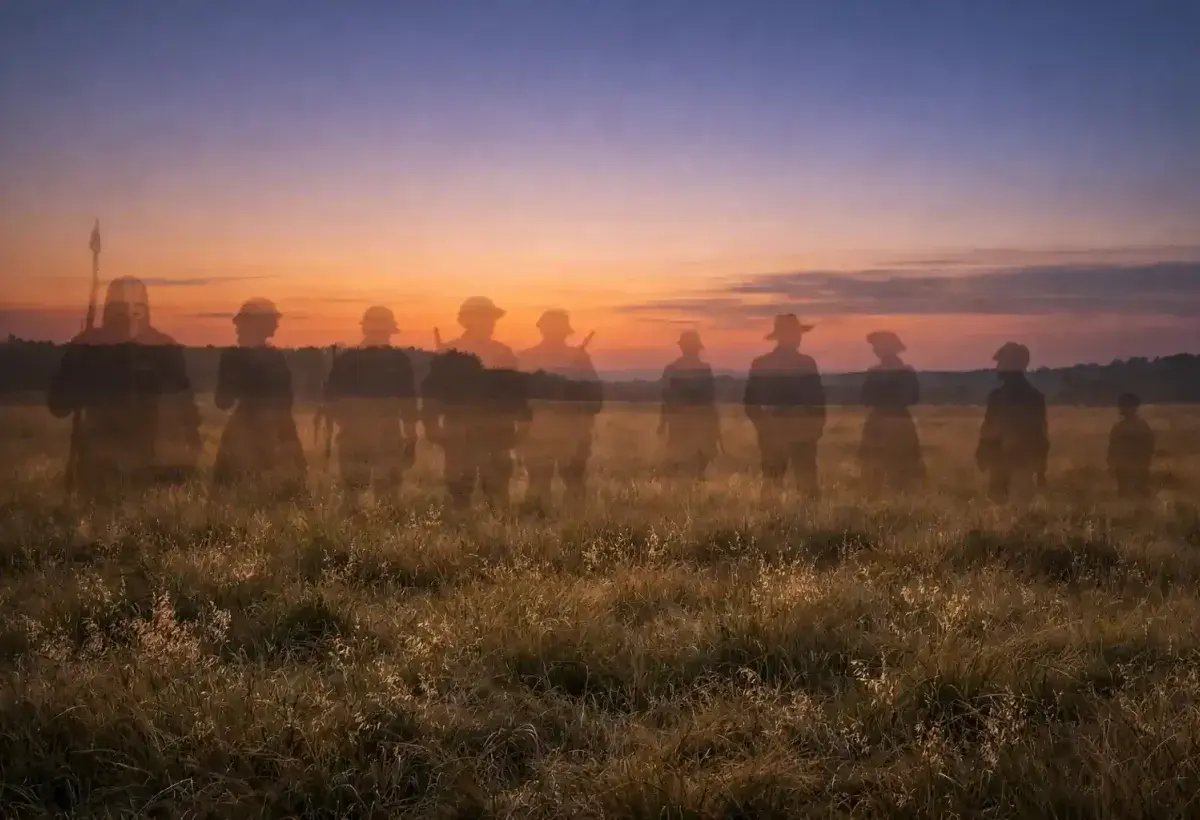
What makes this difficult to hold is not only scale, but separation. These lives are not connected in memory the way they were connected in reality. They are divided by time, by geography, by the way history organizes information.
But from the perspective of loss, there is no separation. Only continuation.
Each ending adds to a larger pattern that stretches across human history like a quiet thread that no one ever intended to weave.
The Story We Choose to Tell
Human beings remember history selectively.
We remember treaties, battles, leaders, dates, turning points. These are structured, teachable, and easy to pass forward. They form the architecture of historical understanding.
But underneath that structure is something less organized. Something that does not fit into timelines or summaries.
That something is what it actually felt like to be there.
History is often treated as what happened. But in practice, history is what is recorded, and what is recorded is always a fraction of what was actually lived.
This is not a flaw in documentation. It is a limitation of attention.
And so over time, the story of war becomes a story of decisions rather than a story of consequences.
We remember who acted. We forget who disappeared.
The Woman Who Was Never Named
There is a site in the ancient Near East where archaeologists once uncovered the remains of a woman and a child buried together beneath collapsed stone.
No written record identifies her. No name survives. Only the position of her arm suggests what happened in her final moment.
She was not recorded as an individual in any surviving text. She was not preserved as a named figure in history.
But she existed.
Image
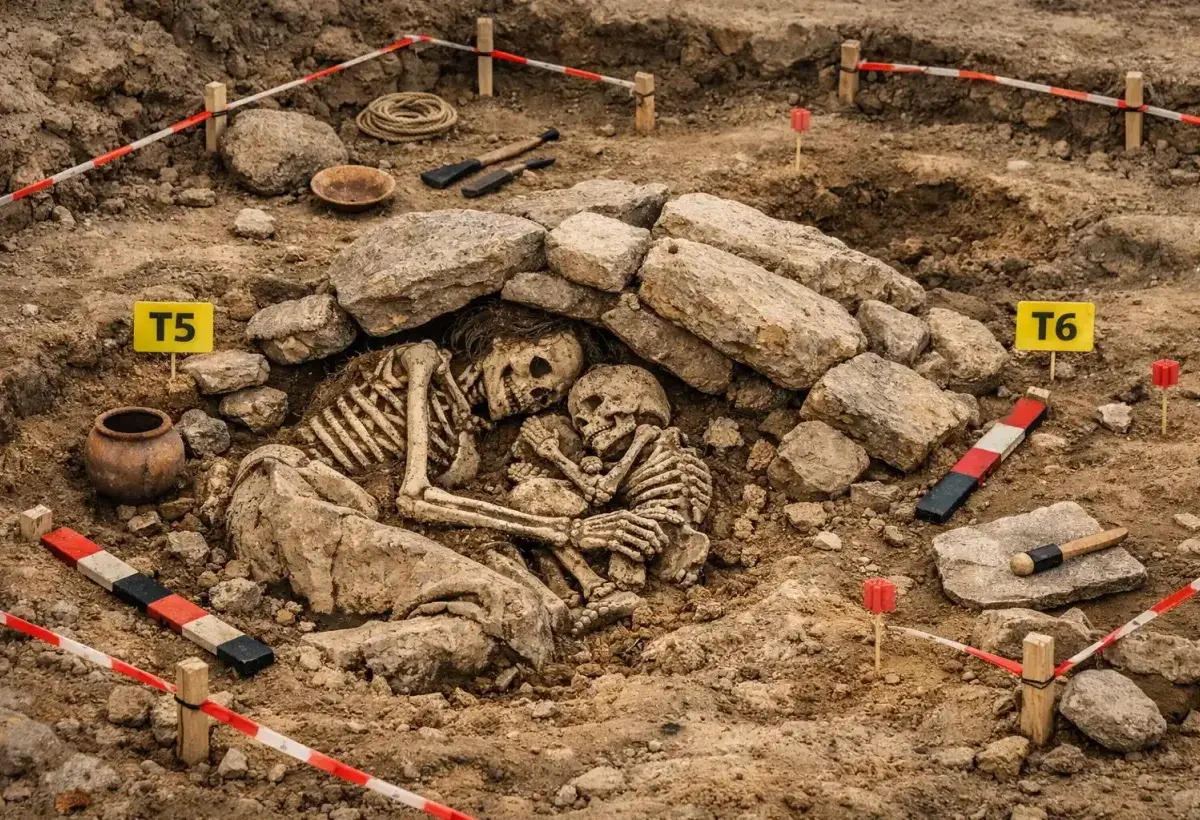
She lived in a world that no longer exists in recognizable form. She experienced time the same way any human being does. Days moving forward. Relationships forming. A future that felt like it belonged to her.
And then, like so many others across history, that continuity ended abruptly.
This is where abstraction becomes inadequate.
Because even if one cannot verify every detail of her life, the fact of her existence is enough to represent something larger. Not as exception, but as pattern.
She is one among many who were never recorded, never named, never remembered in the way history prefers to remember.
Multiply that absence across centuries, and the scale begins to reveal itself again.
Not as number.
But as silence.
What Silence Actually Means
Silence is often misunderstood as emptiness. But silence is not empty. It is filled with what is not being acknowledged.
There are places in the world where silence is structured into daily life. Not because nothing happened there, but because something happened there that became too difficult to fully carry in conversation.
Silence appears in the way stories are told carefully. In the way certain topics are avoided. In the way memory becomes partial to allow life to continue.
In Cambodia, there are landscapes that carry the weight of what occurred without needing constant description. In Bosnia, remembrance and daily routine exist side by side without fully merging. Across the Middle East, generations inherit memory through hesitation more than through narrative.
These are not isolated examples. They are variations of a shared condition.
Silence is what remains when language is no longer sufficient to carry the weight of experience.
Why the Mind Protects Itself from Scale
If a human being were to fully and continuously hold the emotional reality of large-scale historical loss, it would become impossible to function in everyday life.
This is not moral failure. It is cognitive limitation.
So the mind creates distance. It translates overwhelming reality into manageable concepts. It allows life to continue by reducing intensity.
But there is a cost to this protection. Because what is protected from feeling is also partially removed from responsibility.
This is how large numbers become administratively useful but emotionally distant.
It is also how repetition becomes easier to justify.
War as Something Easier Than Peace
War is often described as chaotic, but in human systems it is surprisingly structured. It follows recognizable patterns. It can be planned, organized, justified, and executed within existing frameworks of decision making.
Peace, in contrast, is less structured. It requires constant maintenance. It requires restraint where reaction is easier. It requires long term thinking where short term action is more immediate.
This makes peace more difficult than war in practical terms.
Not because peace is unnatural, but because it demands sustained effort against simpler instincts.
War does not require imagination of the other. Peace does.
What It Means to See One Life Clearly
At the center of all reflection on scale is a simple limitation. Human beings cannot emotionally process millions of lives at once. But they can process one.
One person is enough to reintroduce reality into abstraction.
One life contains memory, emotion, intention, and connection. It is not a unit. It is a world.
Image

This is why moral understanding often begins not with numbers, but with recognition of individuality.
When one life becomes visible again, the distance between statistics and reality begins to collapse.
And in that collapse, responsibility returns.
Five hundred million remains too large to fully comprehend.
But it does not need to be fully comprehended to be understood differently.
It only needs to be recognized as something made of human lives rather than abstract loss.
Because once that recognition occurs, the number stops being distant. It becomes relational. It becomes connected to the same basic structure that defines every human existence.
And at that point, the question shifts.
Not from what happened.
But from what continues to happen.
Peace is not the absence of history. It is the interruption of repetition.
It is not something that arrives once and remains. It is something that must be chosen repeatedly in conditions that often make other choices easier.
Reflection alone does not change history. But it changes what is considered acceptable within it.
And that is where change begins.
Because even after centuries of conflict, the possibility of choosing differently has never disappeared.
It only requires being seen.