
The slow disappearance of the kitchen: How convenience rewrote connection
For generations, the kitchen was not simply a place where food was prepared. It was where relationships were practiced.
Today, it stands often immaculate, well-designed, but underused, no longer the center of the home, but a quiet witness to what has been replaced.
We did not just change how we eat.
We changed how we relate.
The awkward truth we avoid naming
Your smartphone likely knows your food preferences with unsettling accuracy, what you order, when you crave it, how often you repeat it. In contrast, many of us struggle to recall the last uninterrupted conversation we had across a table.
Children now grow up associating “homemade” with minor customization rather than creation. Kitchens, once shaped by rhythm and repetition, are increasingly reduced to staging areas, spaces for reheating, assembling, or passing through.
This shift did not happen abruptly. It arrived quietly, through convenience.
We did not only outsource cooking.
We outsourced the time, the attention, and the small, unstructured moments that once allowed relationships to deepen.
From ritual to transaction
Cooking was never purely functional. It was a daily ritual, predictable, repetitive, and deeply human.
It required waiting.
It invited participation.
It created space for conversation to emerge without force.
In contrast, modern food systems are designed for efficiency. We select, we order, we consume often while distracted. The process is frictionless, but also relationally thin.
What feels like saved time often becomes lost connection.
Image
What the evidence suggests
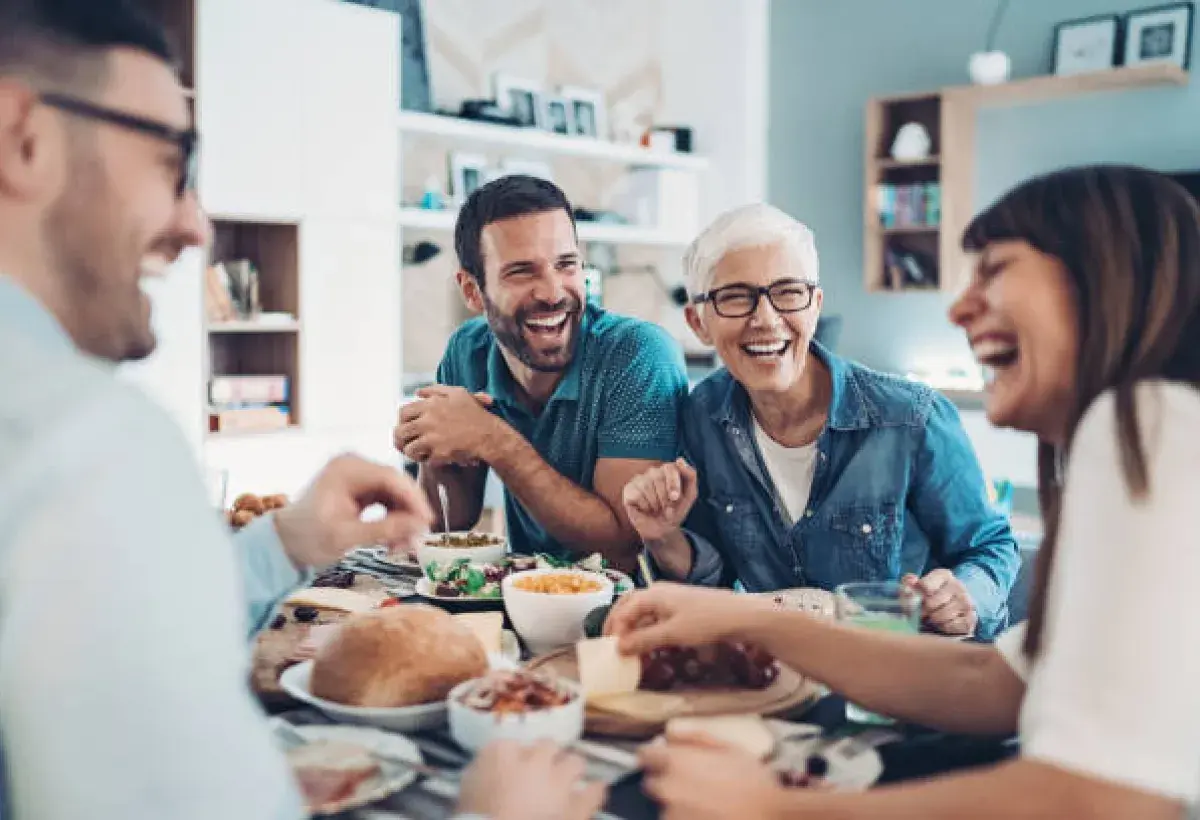
Contemporary research continues to support what many traditions intuitively understood: shared meals are structurally important to human connection.
In Breaking Bread: the Functions of Social Eating, Robin Dunbar (2017) observed that individuals who regularly share meals report higher levels of trust, stronger social networks, and greater life satisfaction.
The implication is not merely social… it is relational.
Eating together does not just accompany connection. It reinforces it.
At the same time, broader behavioral research suggests that social interaction is associated with physiological shifts linked to bonding and reduced stress, including the release of oxytocin and the downregulation of cortisol (Zak et al., 2007). While these mechanisms are not exclusive to meals, they help explain why shared experiences, particularly those involving rhythm and presence—tend to feel grounding.
The subtle erosion
What has been lost is not dramatic. It is cumulative.
Recipes fade not because they are forgotten, but because they are no longer practiced.
Conversations diminish not because they are avoided, but because the conditions that allowed them have disappeared.
Kitchens remain, but their purpose has been quietly rewritten.
The result is not emptiness, but dilution, a thinning of shared experience.
Why the past felt different
Previous generations did not necessarily have more time. What they had was structure.
Cooking imposed a natural pause. It required people to remain in the same space long enough for interaction to occur without agenda.
A parent peeling vegetables beside a child was not “maximizing efficiency.”
They were participating in a shared moment, unremarkable, yet formative.
Mistakes were part of the process. Burned dishes became stories. Delays became conversations. The outcome mattered, but the process carried equal weight.
The kitchen functioned as a quiet training ground for patience, cooperation, and emotional awareness.
Image
Food as an expression of attention
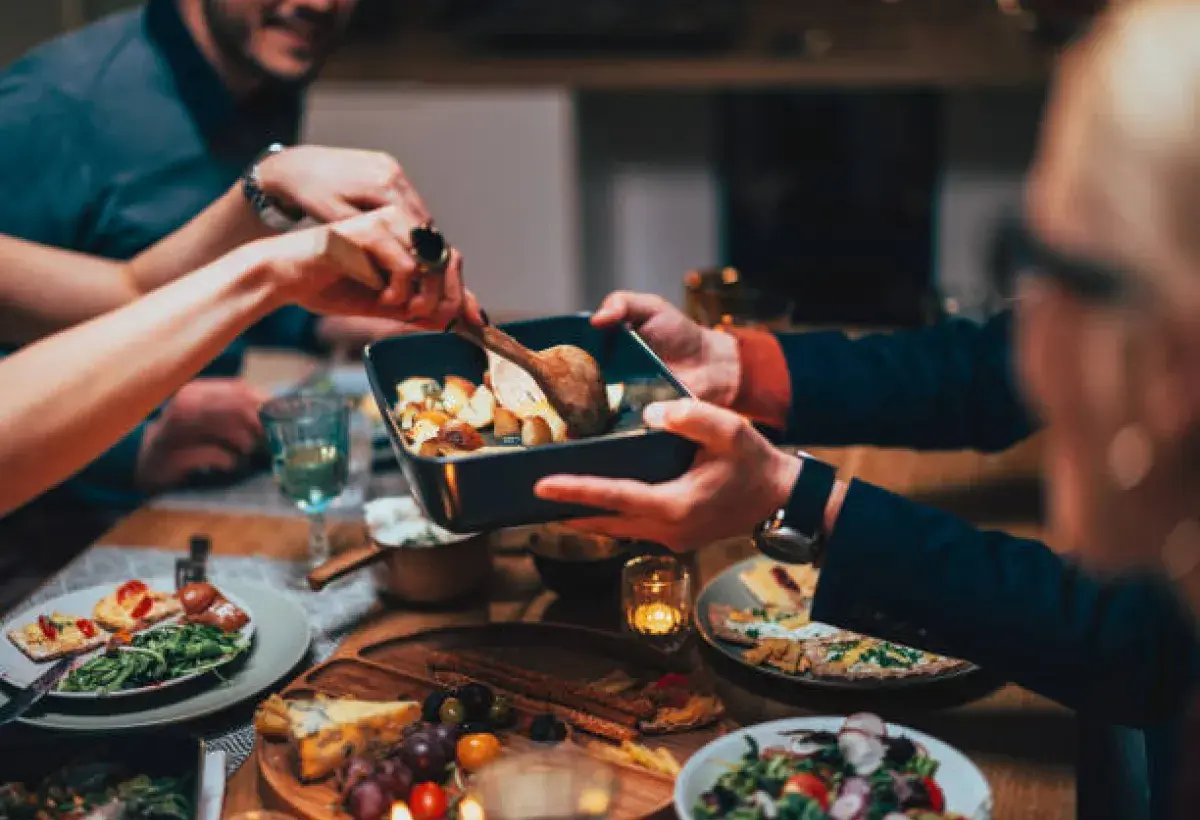
To cook for someone is to translate care into action.
It requires time.
It requires memory.
It requires noticing.
A meal prepared intentionally communicates something difficult to replicate through convenience: you were considered.
This is why certain dishes carry disproportionate emotional weight. They are not remembered for their ingredients, but for the attention embedded within them.
When cooking disappears, that form of expression becomes less frequent, its not replaced, but reduced.
Reclaiming the ordinary
Restoring connection does not require a return to complexity. It requires a return to presence. A meal does not need to be elaborate to be meaningful. What matters is not culinary skill, but shared attention.
- Preparing something simple together
- Sitting without devices, even briefly
- Allowing silence without urgency
- Engaging in conversation without structure
These are small acts, but they reintroduce something essential: mutual presence.
Even takeout, when shared intentionally, can become connective. The difference lies not in the food itself, but in how it is experienced.
The quiet opportunity
The kitchen has not disappeared. It has simply been underutilized.
It remains one of the few spaces where connection can still unfold without performance, where people can engage without the pressure of productivity or outcome. In a culture defined by speed and optimization, this matters.
Because connection rarely emerges in efficiency.
It emerges in time.
A final reflection
There is a quiet irony in how we have restructured our lives. In gaining convenience, we have often reduced the very experiences that once made life feel full. And yet, nothing has been permanently lost.
A shared meal, however simple, still holds the same potential it always did. Not to impress, but to connect. Not to perform, but to be present
The question is, are we still willing to sit long enough for connection to happen?
Image

About the Author
Clarity Edited writes each word with intention, unfiltered, unsoftened, and without diluting thought. There is no ambiguity, only a quiet effort to bring light to those reading in their darker spaces.
Sources
Dunbar, R. I. M. (2017). Breaking bread: The functions of social eating. Adaptive Human Behavior and Physiology, 3(3), 198–211. https://doi.org/10.1007/s40750-017-0061-4
Zak, P. J., Stanton, A. A., & Ahmadi, S. (2007). Oxytocin increases generosity in humans. PLoS ONE, 2(11), e1128. https://doi.org/10.1371/journal.pone.0001128