This article is part of a 5-part series:
Part 1 | Part 2 | Part 3 | Part 4 | Part 5
The song that was never yours. Some songs arrive not as sound, but as shelter. The Wanderer has learned this slowly, that there are melodies which do not entertain, do not impress, do not even linger by choice. They arrive when something within you has reached its limit.
And in that moment, they do not ask who you are.
They simply hold you.
Reykjavík: the silence broke
It was not the cold that unsettled you most. It was the quiet.
That familiar silence that does not comfort, but expands, stretching across unfamiliar streets, settling into the spaces between thought and feeling. You carried it with you into the hostel, into the narrow bunk, into the restless hours where sleep refused to come.
At 3 a.m., the body begins to negotiate.
Should I leave?
Was this a mistake?
Is solitude strength, or avoidance?
The Wanderer recognizes this threshold well, the moment when travel stops feeling like freedom and begins to resemble exposure. And then, without announcement, something interrupts… just a silent melody, thin at first, almost fragile. You follow it.
The lullaby
Down a dim corridor. Barefoot. Half-awake, half-surrendered. An old man sits alone, bow moving with a steadiness that feels older than the room itself. He remembers. You simply sit across from him without asking.
He does not look at you.
He does not need to.
“This,” he says, almost to himself,
“is what the northern lights sound like.”
The Wanderer does not question this. Because the song does not sound like explanation. It sounds like recognition. Then, something within you loosens. The kind of release that silently allow tears to flow, absorbed into wool, breath steadying, the body remembering that it can soften without breaking.
In that moment, you are not less alone. But you are no longer abandoned by yourself.
Image
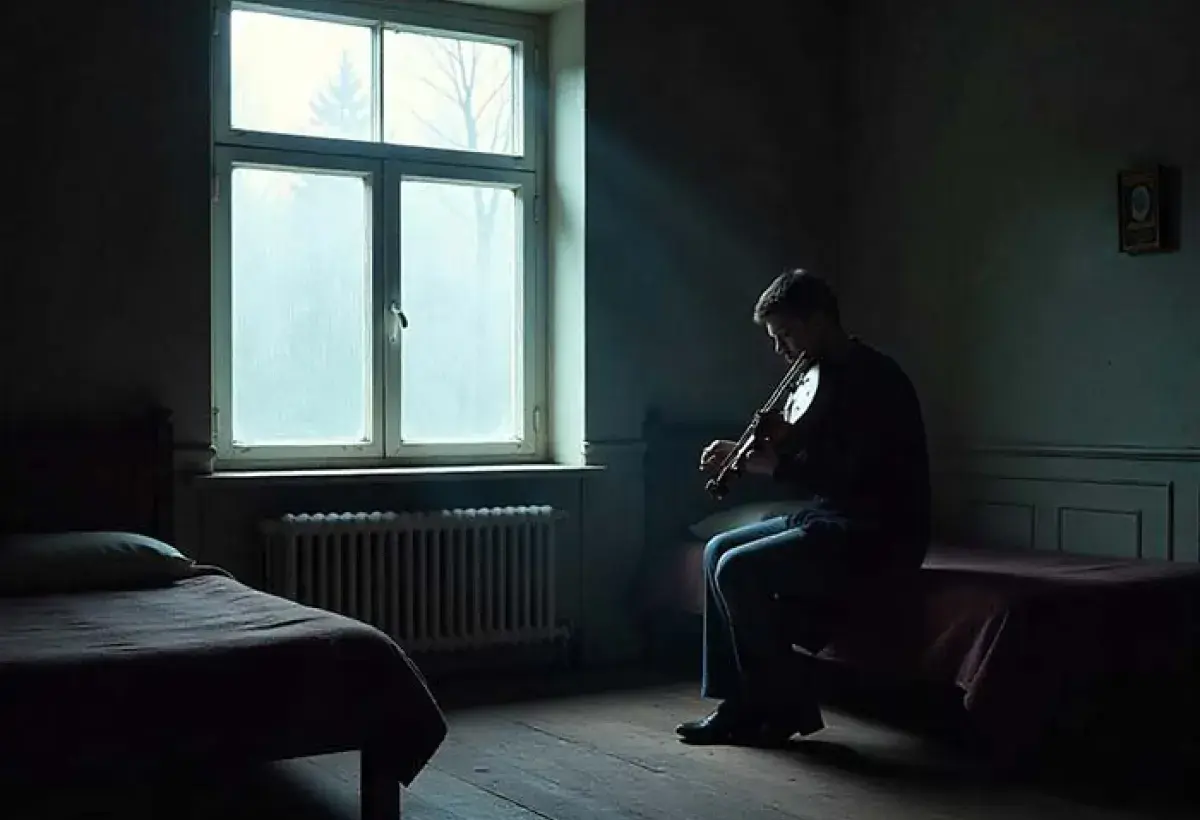
What we anchor ourselves to?
Time moves. It always does. A year later, the memory has changed shape. It has become something you can carry, and something you can name. You literally mark it. Ink against skin. Runes you do not fully translate, but deeply understand. A private declaration:
I survived that night.
I can exist without needing to be held by someone else.
The Wanderer understands this impulse not as vanity, but as preservation. We do not always trust memory to remain. So we make it visible.
When the song returns - differently
And then, slowly, the past re-enters, not through memory, but through interruption. A screen, a scroll, a moment that was not meant to matter. And yet, it does. There they are.
Not in Reykjavík. Not in your story.
But in a version of the place that looks… familiar. Too familiar. It is the same landscape, the same vantage point, and beneath it is the same song - your song.
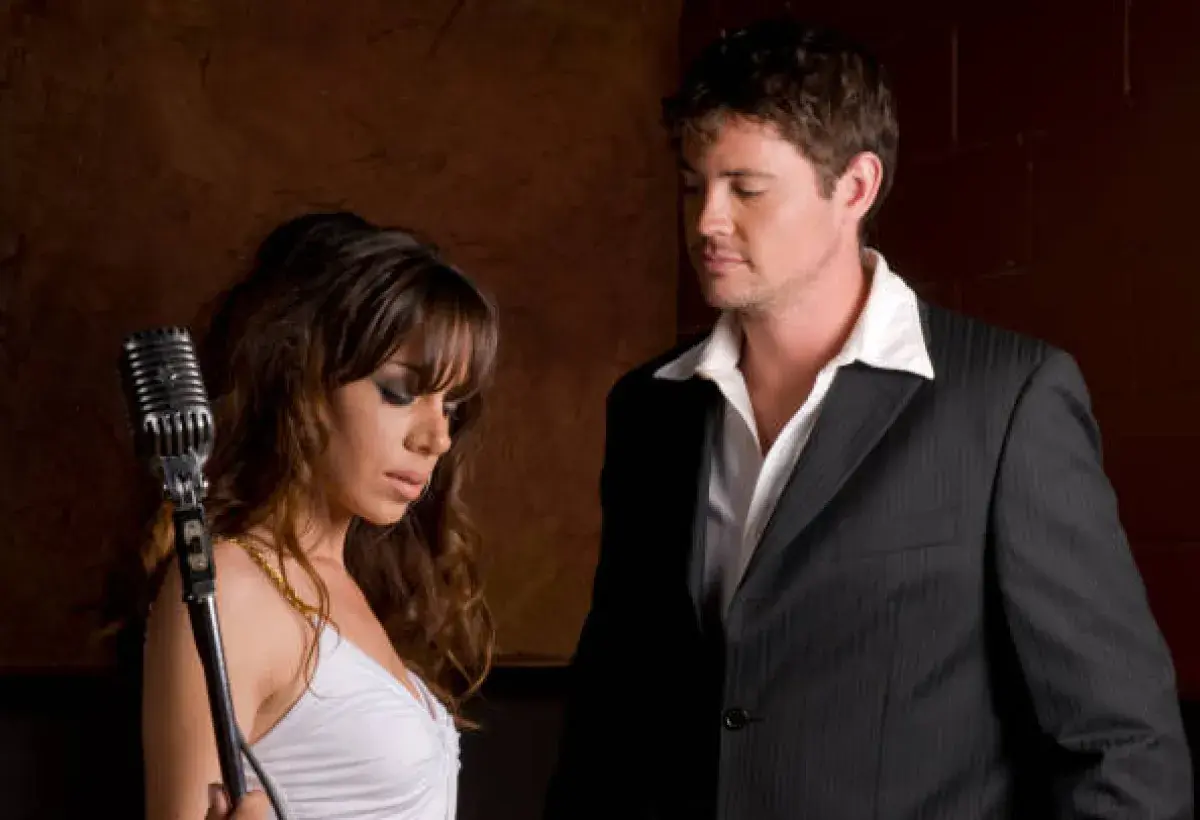
Reframed. Re-captioned. Reassigned. “Found my forever duet partner ❤️”
The Wanderer pauses here. Not at the image but at the reaction. Because what follows is not simply jealousy, nor anger, nor even loss. It is displacement. The quiet disorientation of seeing something once deeply personal now existing freely, detached from you, reinterpreted by someone else’s narrative.
The illusion of ownership
It feels like something has been taken. But has it? The Wanderer asks this gently.
Did the song belong to you?
Or did it meet you?
Music does not root itself in one life. It moves.
From one room to another, from one listener to the next, and from one meaning to another. That night in Reykjavík was real.
But it was never exclusive.
The song did not choose you alone.
It simply arrived when you were ready to receive it.
Image
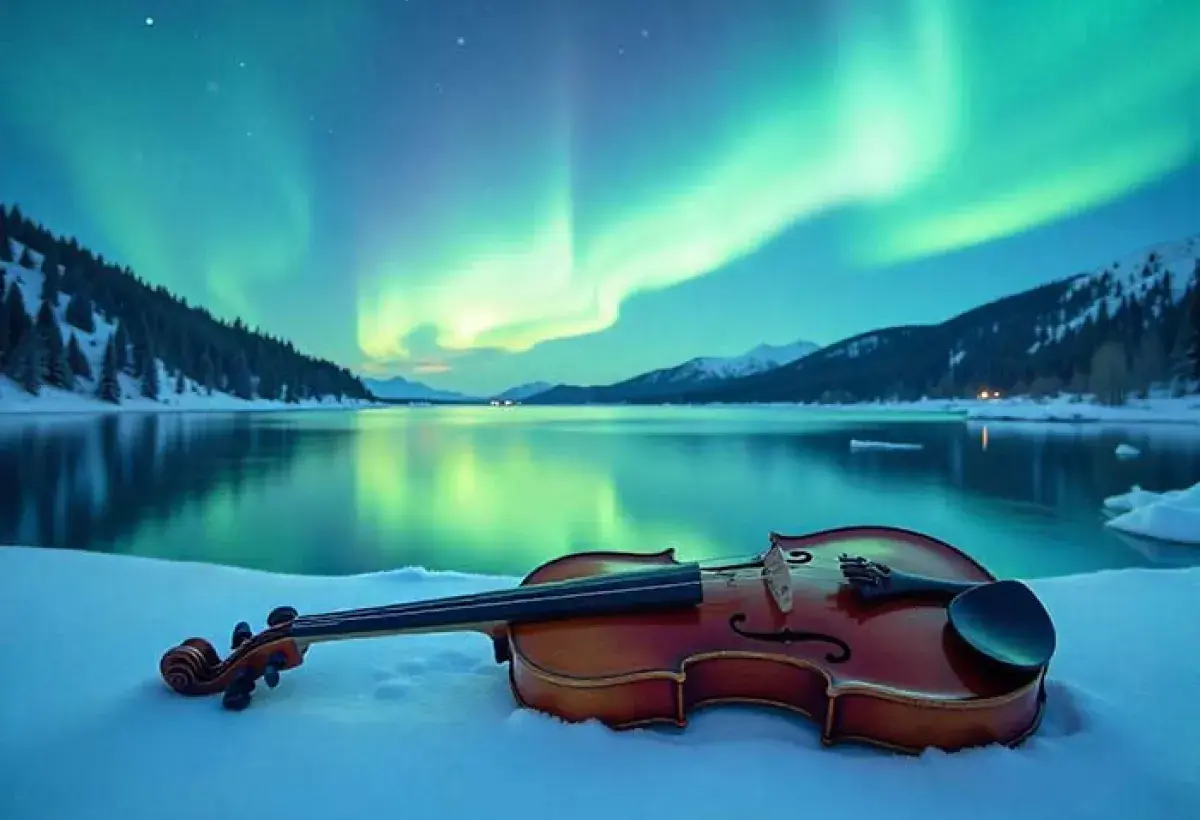
Why travel songs cut deeper
There is a reason these songs linger.
Travel destabilizes identity. It removes the familiar structures that define who we are, routine, language, proximity to those who know us. In that absence, the self becomes more permeable. And when music enters that space, it does not sit at the surface.
It embeds.
Emotion and sound fuse, not as background, but as structure. The brain encodes them together, making the melody not just a reminder, but a re-entry point. This is why travel songs do not simply recall. They return you.
What the song was always saying
You revisit the memory and not the image on the screen, but the original moment. The old man, the bow and even the quietness… And later, you had translated the lyrics:
Love is temporary.
At the time, it felt poetic. Almost distant. Now, it feels… precise.
The Wanderer does not interpret this as loss, she sees it as clarity. The song did not promise permanence.
It offered presence. And presence, when fully experienced, does not diminish when it ends.
Reclaiming without possessing
Out of respect, months pass before you play it again. The first notes still carry weight as the body remembers. The mind follows more slowly. But something has shifted.
The pain is no longer sharp.
It has diffused, expanded into something quieter. You no longer hear them in the song. You hear yourself.
Not the one who was hurt,
but the one who sat in that dim room and allowed herself to feel, without resistance, without performance.
Reflection
The Wanderer no longer believes that songs can be taken. It can only transformed.
What once held loneliness can later hold strength.
What once held healing can later reveal attachment.
What once felt like loss can, with time, become understanding.
So she plays the song again, not to revisit what has passed… but to acknowledge that, for a moment in time,
sound became shelter.
And she had the courage to stay and listen. Because some songs are not meant to belong to us.
They are meant to pass through us
leaving us changed,
and then moving on.
Image

About the Wanderer
The Wanderer moves gently through the world, observing, feeling, and reflecting as she goes. She wanders not to escape, but to understand, carrying conversations within herself as she takes in the quiet details of life. She listens to her surroundings, but more closely, to her own thoughts. In every step, she learns to appreciate the changing seasons of emotion. This journey is not about arriving, but about becoming, one reflection at a time.
Cast Your Vote
Image