There has been something on my mind lately that I just cannot seem to shake.
Maybe it is because my two daughters are teenagers now. Before long, they will be making decisions that could influence the direction of their lives for years to come. As a parent, I want to help guide them toward a future filled with opportunity, but I also know that good intentions do not always lead to the right advice. The world they are preparing to enter is not the same one I grew up in, and that realization has caused me to question something I once accepted without hesitation.
When I was their age, the path seemed straightforward.
Go to college. Earn a degree. Get a good job. Build a comfortable life.
That advice came from parents, teachers, guidance counselors, and employers. It was repeated so often that very few of us ever stopped to question it. A college degree was seen as the key that unlocked better opportunities, higher salaries, and greater financial security. If you wanted to get ahead, higher education was considered the obvious next step.
For many people, including me, that advice made perfect sense.
Today, I find myself asking a question I never imagined I would ask.
Is a college degree still worth what it used to be, or has the world changed enough that we need to rethink what success looks like for the next generation?
That is not an easy question to answer.
Growing up during the 1980s and 1990s, relatively few people earned university degrees compared to today. Having one immediately made you stand out. Employers often viewed a degree as evidence that you were disciplined, committed, and capable of tackling difficult challenges. While it certainly did not guarantee success, it often opened doors that remained closed to others.
Back then, there was very little debate about whether college was the right choice. It simply was.
Looking back, I understand why.
The economy was different. Technology was different. The workplace was different.
Most importantly, the expectations of employers were different.
Fast forward to today and almost everything has changed. The advice that worked for one generation does not always fit the next.
Technology continues to reshape industries at an astonishing pace. Artificial intelligence is beginning to transform the way many companies operate. Remote work has become common in careers where it once seemed impossible. Entire professions have appeared over the past twenty years that did not even exist when I graduated from high school.
The world my daughters are preparing for bears little resemblance to the one I entered.
That alone makes me wonder whether the advice I grew up with still applies.
College itself has changed as well.
Higher education is no longer reserved for a relatively small percentage of students. For many families, attending college has become the expected next step after high school. In many communities, choosing not to pursue a university degree almost feels like going against the norm.
At first glance, that seems like progress.
Education has tremendous value. Learning always has value. Expanding your understanding of the world is something nobody can ever take away from you.
But another thought keeps returning to my mind.
If almost everyone earns a college degree, does it still offer the same advantage that it did thirty or forty years ago?
I am not asking that question because I believe higher education has lost its importance.
Quite the opposite.
There are professions where a university education is absolutely essential. We expect our doctors to spend years in medical school. Engineers need rigorous academic training. Architects, pharmacists, teachers, scientists, accountants, and countless other professionals rely on specialized education that simply cannot be replaced.
Society depends on people who dedicate themselves to those careers.
What I am questioning is something much broader.
Have we reached a point where we automatically encourage every young person toward college without giving equal attention to the many other paths that can also lead to successful and fulfilling lives?
The question became even more personal as I watched stories about recent graduates struggling to find work.
It almost feels like a contradiction.
Companies frequently say they cannot find enough qualified workers, yet thousands of college graduates say they cannot find jobs in the fields they spent years preparing for.
How can both be true?
The more I thought about it, the more I realized the problem may not be a shortage of jobs or even a shortage of educated people. Instead, it may be a mismatch between the skills employers need and the careers many students are pursuing.
Over the past year, I have repeatedly come across articles discussing shortages of electricians. Then plumbers. Then welders. Then industrial maintenance technicians. Then heating and cooling specialists.
The same message kept appearing over and over.
These industries need skilled workers.
At the very same time, many college graduates are competing with hundreds of applicants for office positions that often require years of experience before someone is even considered for an interview. The more I saw that pattern, the more I wondered whether we have been preparing too many young people for the same destination while overlooking equally valuable careers that are desperately needed.
That contrast made me stop and think.
Have we unintentionally convinced an entire generation that success only comes from sitting behind a desk?
Image
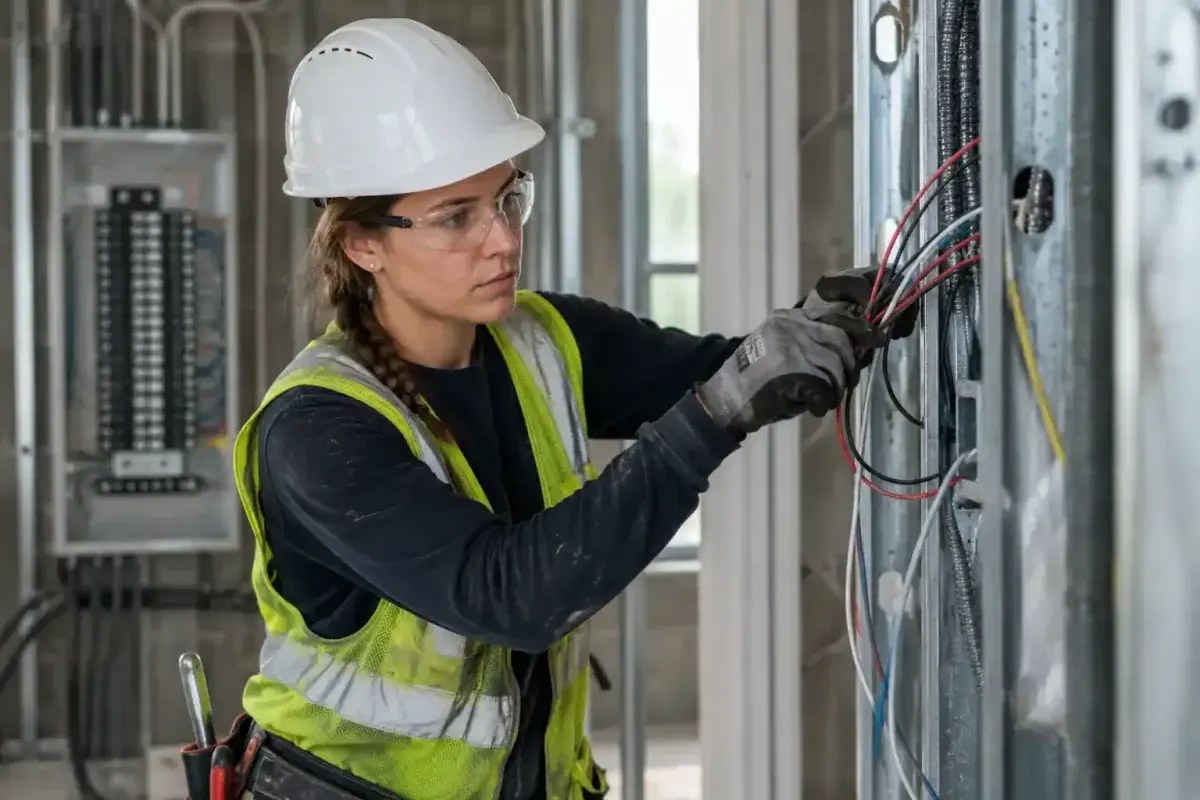
When I was younger, vocational careers rarely received the same level of encouragement as university degrees.
Students with high grades were expected to go to college. Trade schools were often presented as an alternative instead of an equally respected option.
Looking back, I wonder if that was fair.
Every time I switch on the lights in my home, I depend on the knowledge and skill of an electrician.
Every time clean water flows from the faucet, I benefit from the work of plumbers and the countless professionals who maintain complex water systems.
Every school, hospital, office building, bridge, and home I enter exists because skilled workers designed, built, and maintained it.
These careers are not secondary.
They are essential.
Without them, modern life simply would not function.
So why have we spent decades treating many of these professions as though they are somehow less successful?
I honestly do not know the answer.
Perhaps somewhere along the way we unintentionally created the impression that success could only be measured by a university diploma hanging on a wall.
If that happened, maybe it is time to rethink that assumption.
One lesson life has taught me is that success rarely follows a single path.
Some people build remarkable careers through higher education.
Others build equally remarkable lives through apprenticeships, technical schools, certifications, and years of practical experience.
Some eventually become business owners.
Others become mentors, innovators, or respected experts in their field.
The road may look different, but the destination can be every bit as rewarding.
That realization brings me back to my daughters.
Like every parent, I want them to have opportunities I never had. I want them to discover work they genuinely enjoy. I want them to become financially independent, confident in their abilities, and proud of what they accomplish.
What I no longer want is to assume there is only one road that can lead them there.
That is why I have started looking at my daughters' future a little differently.
If one of them tells me she wants to become a doctor, I will support her wholeheartedly because that dream requires years of education and dedication. If the other wants to become an engineer, I will encourage her every step of the way.
But if one of them tells me she wants to become an electrician, a welder, a plumber, or pursue another skilled trade because she enjoys solving practical problems and working with her hands, I hope I will have the wisdom to support that dream with the same enthusiasm.
Success should never be measured solely by the title printed on a diploma.
It should be measured by whether someone finds meaningful work, continues to grow throughout life, and builds a future they can be proud of.
Image
The older I get, the more one word keeps coming back to me.
Experience.
When I was younger, I believed education came first and experience followed. Today I realize they are far more connected than I once imagined.
Some of the smartest people I have ever worked with did not have the longest list of academic credentials. What they possessed was something far more difficult to teach.
They knew how to solve problems.
They stayed calm when things went wrong.
They knew how to think under pressure.
Most importantly, they understood their craft because they had spent years learning through real situations instead of hypothetical ones.
Books can explain principles.
Teachers can demonstrate techniques.
Classrooms can build a strong foundation.
But experience forces us to make decisions, recover from mistakes, adapt to unexpected challenges, and keep improving. Those lessons become part of who we are in ways that no textbook can fully replicate.
Perhaps that is why so many employers continue asking for experience.
It is not simply about knowing information.
It is about knowing how to apply it.
Ironically, my own journey has completely changed the way I think about education.
After spending more than three decades building businesses, working in technology, creating software, solving complex problems, and learning through countless successes and failures, I eventually decided to return to college to finish the degree I had started many years earlier.
Some people assume that decision reinforced everything I believed about higher education.
In reality, it had almost the opposite effect.
Returning to the classroom reminded me just how valuable education can be.
It challenged me to think differently.
It exposed me to new perspectives.
It encouraged me to continue learning instead of relying only on what I already knew.
For that, I will always be grateful.
At the same time, it also reminded me that many of the lessons that shaped my career never came from a classroom.
They came from launching businesses.
They came from working with clients.
They came from making expensive mistakes.
They came from leading teams, adapting to changing technology, and solving problems that had no answers printed in a textbook.
That realization changed the way I view education.
I no longer see education and experience as competing with one another.
I see them as partners.
A degree may open the door.
Experience teaches you what to do after you walk through it.
When those two come together, they become an incredibly powerful combination.
That perspective has also made me think much harder about the financial side of education.
When I was younger, paying for college certainly was not easy, but today's costs feel like they belong to an entirely different world.
Tuition continues to rise.
Housing has become more expensive.
Books, transportation, technology, and everyday living expenses add thousands more to the total cost.
For many families, helping a child earn a degree becomes one of the largest financial commitments they will ever make.
As a father, it is impossible not to ask whether that investment will provide the return we hope for.
Please do not misunderstand me.
This is not about putting a price tag on knowledge.
Knowledge is priceless.
Learning changes the way we think.
Education broadens our perspective and often creates opportunities that would never exist otherwise.
The question is not whether education has value.
The question is whether the traditional four year university path is always the best investment for every student.
That is a much more difficult conversation.
I have read stories about graduates who spent years earning degrees only to discover that many employers still expected several years of experience before offering them their first opportunity.
That has always puzzled me.
How does someone gain experience if every employer expects them to have experience before they are hired?
It feels like an impossible cycle for many young adults.
Meanwhile, there are industries actively searching for skilled workers because there simply are not enough qualified people entering those fields.
Electricians.
Plumbers.
Mechanics.
Heavy equipment technicians.
Industrial maintenance specialists.
Heating and cooling technicians.
Many employers in these industries are looking for people who are ready to learn and willing to work.
Some even pay apprentices while they are training.
That contrast fascinates me.
On one side are hundreds of graduates competing for a single office position.
On the other are businesses searching for qualified tradespeople and struggling to fill openings.
It makes me wonder if, over the past few decades, we became so focused on encouraging college that we unintentionally stopped celebrating the importance of skilled trades.
Perhaps we convinced ourselves that success only happens inside an office.
If so, I think we underestimated the people who literally build and maintain the world around us.
Image
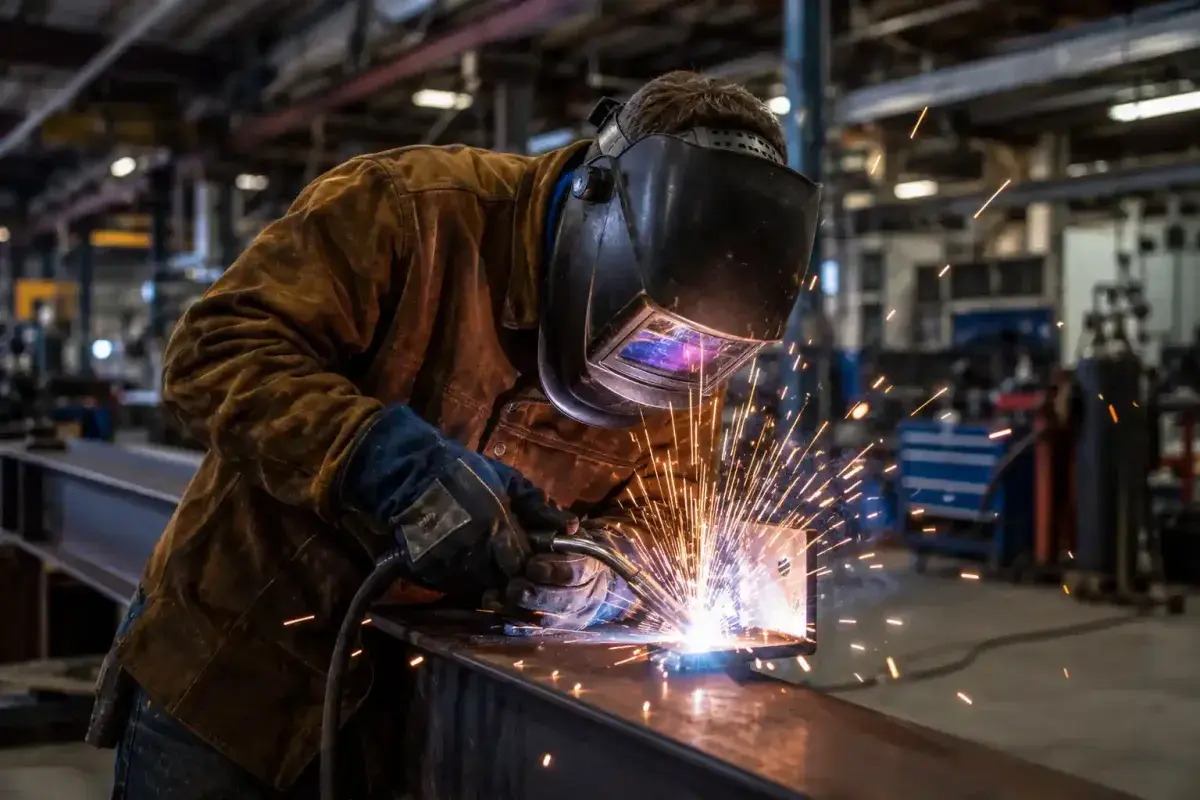
I remember hearing people say they wanted their children to have office jobs so they would never have to work with their hands.
Looking back, I see that differently.
Working with your hands is not something to avoid.
Creating something tangible should be a source of pride.
Building homes matters.
Repairing electrical systems matters.
Keeping hospitals running matters.
Installing clean water systems matters.
Constructing schools matters.
These careers demand intelligence, technical expertise, precision, and years of practice.
They deserve every bit as much respect as careers that require a business suit and a corner office.
Perhaps the greatest mistake we have made is believing there is only one definition of success.
Technology has only added another layer to this conversation.
When I was growing up, people often chose a career expecting they would stay in the same industry until retirement. That still happens, but it is becoming less common. Today's students are entering a world that changes faster than ever before.
Artificial intelligence is already transforming how businesses operate. Tasks that once required entire departments can now be completed in minutes with the help of software. Automation continues to reshape manufacturing. Digital tools are changing healthcare, finance, education, marketing, and countless other industries.
No one can say with certainty what the job market will look like twenty years from now.
Some careers that seem secure today may look very different in the future. At the same time, entirely new professions will emerge that none of us can predict.
That uncertainty has changed the way I think about preparing my daughters for adulthood.
Instead of asking myself which career will guarantee lifelong security, I find myself asking a different question.
What qualities will help them succeed no matter how the world changes?
I believe the answer has less to do with a specific degree and far more to do with the kind of people they become.
I hope they remain curious.
I hope they become resilient when life does not go according to plan.
I hope they learn how to communicate with kindness and confidence.
I hope they become dependable, honest, and willing to solve difficult problems.
Most of all, I hope they never lose the desire to keep learning.
That may be the greatest lesson I have learned through my own journey.
Education does not end on graduation day.
If anything, graduation is where real learning begins.
That is where theory meets reality.
It is where mistakes become teachers instead of failures.
It is where confidence is built one challenge at a time.
It is where experience slowly shapes judgment.
No diploma can replace those lessons.
They have to be earned.
The more I reflect on all of this, the more I realize we often frame the conversation the wrong way.
People ask whether college is better than a trade school.
Others argue that experience is more valuable than education.
I no longer believe those comparisons are helpful.
Education and experience were never meant to compete with one another.
They complement each other.
Someone with a university degree who continues learning throughout life will keep growing.
A skilled tradesperson who embraces new technology, earns certifications, and keeps improving will continue growing as well.
The common thread is not where they started.
It is whether they stopped learning.
Perhaps that should be our goal as parents.
Not to convince our children that one path is superior to another.
Instead, we should help them discover the path that matches their talents, interests, and ambitions.
We should expose them to possibilities instead of expectations.
Let them explore.
Let them ask questions.
Let them visit universities.
Let them tour technical schools.
Let them speak with business owners, engineers, electricians, nurses, mechanics, software developers, plumbers, teachers, and entrepreneurs.
The more they understand the opportunities available, the better equipped they will be to choose a future that truly fits who they are.
That, in my opinion, is far more valuable than simply telling every teenager to follow the same roadmap.
Image

As I have reflected on this over the past several months, I have realized something that surprised me.
Maybe I have been asking the wrong question all along.
Instead of asking whether college is worth it, perhaps I should be asking whether we are helping young people choose the path that is right for them.
Those are two completely different conversations.
One assumes there is a single answer.
The other recognizes that every person is unique.
Some students thrive in lecture halls.
Others thrive in workshops.
Some dream of becoming surgeons.
Others dream of building homes.
Some love writing software.
Others enjoy repairing engines or designing electrical systems.
None of those dreams deserves more respect simply because society says one sounds more prestigious than another.
Every honest profession contributes something meaningful.
Every community depends on people with different talents.
The world needs doctors.
The world also needs electricians.
The world needs software engineers.
The world also needs welders.
The world needs teachers.
The world also needs plumbers.
One career is not more important than another because none of them can stand alone.
Communities work because people with different skills work together.
As parents, I believe our responsibility is not to choose our children's future.
Our responsibility is to help them discover it.
We should encourage them to think critically, stay curious, and understand both the opportunities and the sacrifices that come with every career.
Then we should trust them enough to build a life that reflects who they are instead of who we expected them to become.
When I think back to the advice I received growing up, I realize it was not wrong.
It simply belonged to a different time.
A college degree opened many doors for previous generations because the world was different.
Today's world asks different questions.
The future belongs to people who can adapt.
People who continue learning.
People who solve problems.
People who embrace change instead of fearing it.
Whether those skills are developed inside a university classroom, a technical institute, an apprenticeship, or through years of hands on experience matters less than I once believed.
What matters is continuing to grow.
So where have I landed after thinking about all of this?
I still believe education is one of the greatest investments anyone can make.
I also believe education comes in many forms.
Sometimes it happens inside a university.
Sometimes it happens inside a workshop.
Sometimes it happens on a construction site.
Sometimes it happens while working beside someone with decades of experience who patiently teaches the next generation.
Learning has never belonged to a single institution.
It belongs to anyone who refuses to stop growing.
When I look at my daughters, I no longer dream about impressing people with the names of the schools they might attend.
I dream about something much bigger.
I hope they become women of character.
I hope they build lives filled with purpose.
I hope they find work that challenges them, supports them, and allows them to make a difference in the lives of others.
If that journey takes one of them through a university campus, I will celebrate with pride.
If it takes the other through a technical school, an apprenticeship, or a skilled trade, I will celebrate just as enthusiastically.
Because I have come to believe that success is not measured by the words printed on a diploma.
It is measured by integrity.
By curiosity.
By resilience.
By the willingness to keep learning long after school is over.
And perhaps most importantly, by finding work that gives life meaning while making the world a little better for someone else.
Maybe that is the real lesson this journey has taught me.
The world has changed.
The job market has changed.
Education has changed.
Perhaps our definition of success should change as well.
A college degree has value.
Practical skills have value.
Experience has value.
Character has value.
None of these replaces the others.
Together, they prepare us for a future none of us can fully predict.
If there is one lesson I hope my daughters carry with them, it is this.
Do not chase someone else's definition of success.
Keep learning.
Keep growing.
Stay humble enough to ask questions.
Stay brave enough to change direction when life calls for it.
Because in the end, the most valuable education is not simply the one that earns you a diploma. It is the one that helps you build a life filled with purpose, integrity, and work you are proud to call your own.