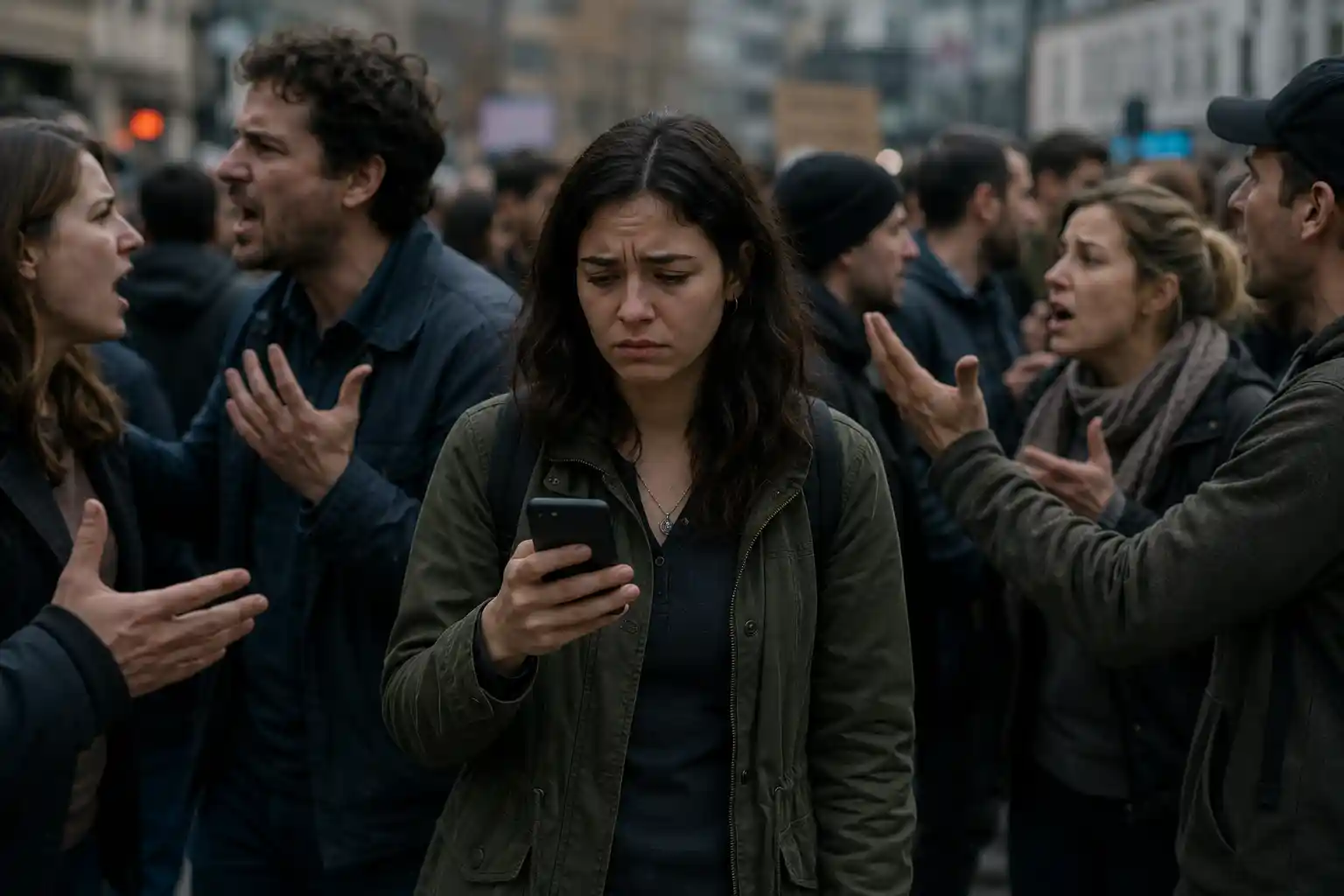
There are mornings now when I open an app and feel a knot tighten in my chest before I have even read a single word.
I do not know when this started exactly. It crept up slowly, like a fog rolling in until one day I realized I could barely see through it. What was once a window to the world has become a mirror reflecting our worst impulses back at us, magnified and distorted until we barely recognize ourselves.
Maybe it is just me getting older. Maybe nostalgia has softened the edges of the past. But I cannot shake the persistent feeling that something fundamental has shifted in how we relate to one another.
Not long ago, social networks felt different in ways that are almost embarrassing to admit now. People shared photos of their lunch with genuine excitement. Parents posted blurry pictures of their children doing ordinary things. Friends uploaded vacation snapshots that were slightly out of focus. Someone might write a long rambling post about their day or a photo of a sunset they happened to notice on the way home from work. There was no curation, no pressure to perform, no fear of judgment.
The internet felt smaller then. It felt more like a neighborhood than a stadium.
It felt more personal. More human.
Today, scrolling through many social feeds feels like walking through a crowded room where everyone is shouting. Every topic becomes a battleground. Politics is war. Sports is war. Movies are war. Music is war. Even a simple photograph of a meal can somehow become the starting point for hundreds of angry arguments. The mundane has been swallowed by the militant.
Sometimes I find myself asking the same question over and over. Where did all this anger come from? Was it always there beneath the surface, waiting for permission to emerge? Or did something happen to us along the way, some collective shift we failed to notice until it was too late?
Image
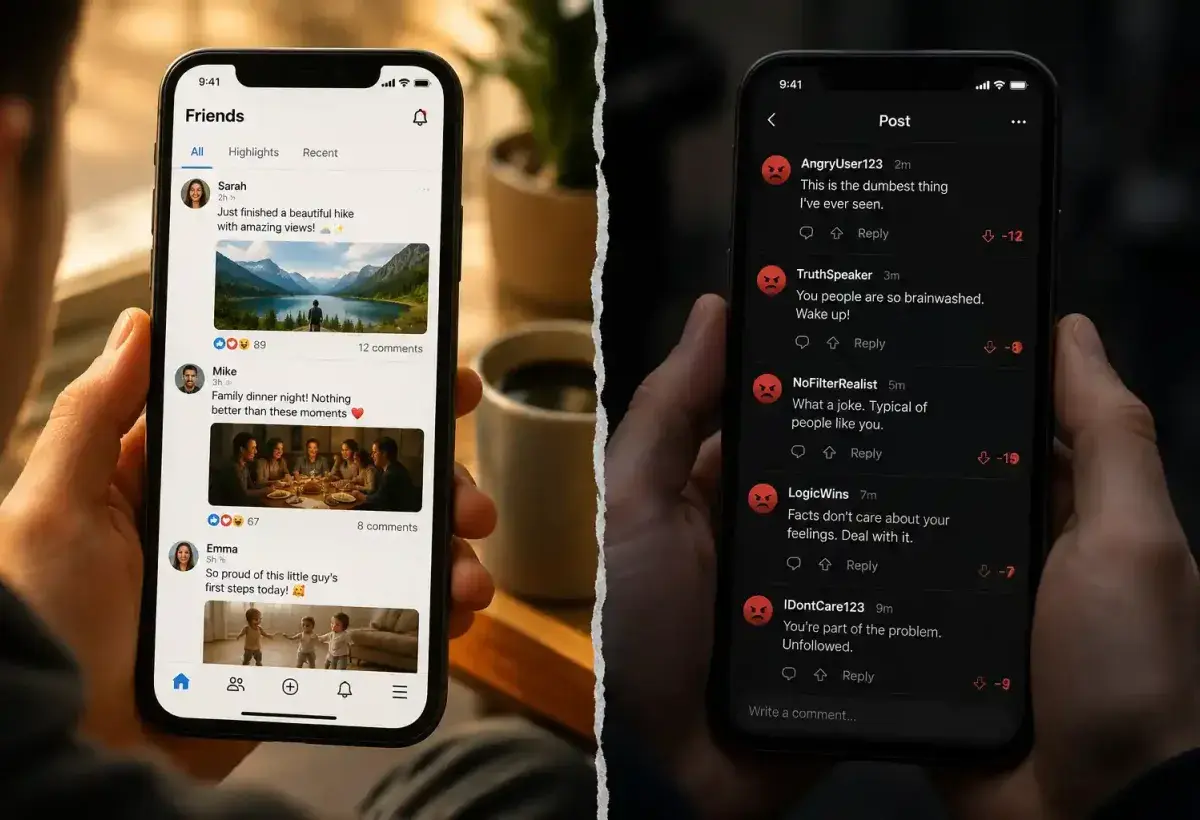
I remember the early days of social media because I lived through them. The excitement was genuine. There was a sense of possibility in the air, a feeling that we were building something new and wonderful together.
The promise was disarmingly simple.
A student could stay connected with friends after graduation, no matter how far they scattered across the world.
A family separated by oceans could share moments together in real time, watching a child's first steps from thousands of miles away.
Someone with a unique hobby could finally find others who shared the same obscure interest, forming communities that geography had previously made impossible.
The internet was supposed to bring people together. That was the dream. And in many ways, it succeeded beyond anyone's expectations.
People met friends they otherwise never would have met. Small businesses found customers in places they could never have reached. Artists found audiences who appreciated their work. Communities formed around shared interests, creating support networks for people who once felt entirely alone.
But somewhere along the way, the platforms that hosted these connections discovered something uncomfortable. Something they perhaps wish they had never found.
Anger keeps people engaged. Not just engaged, but locked in.
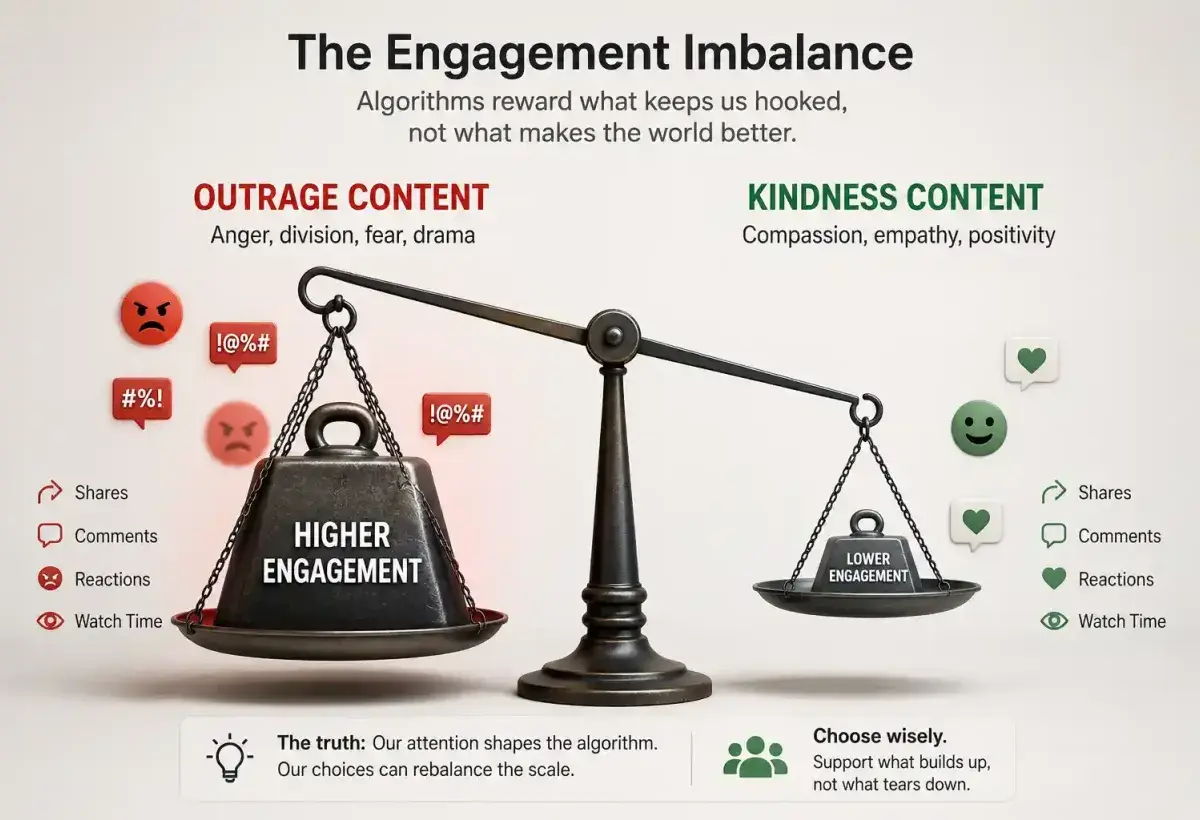
When people become angry, they comment. When they comment, they stay longer. When they stay longer, they see more advertisements. When they see more advertisements, platforms make more money. The math is cold, relentless, and devastatingly simple. The system rewards what provokes, not what uplifts. It optimizes for reaction, not for reflection.
The result is an environment that systematically favors outrage over understanding.
A thoughtful discussion might receive a handful of likes. An angry argument can spread across millions of screens within hours, igniting reactions around the world. The algorithm does not care whether something makes people better. It cares whether something keeps people watching. The distinction is everything, and we are all paying the price for it.
Over time, this creates a world where the loudest voices receive the most attention. The most extreme opinions rise to the surface. The calm middle ground becomes harder to find. Moderation is drowned out by provocation. Reason is overwhelmed by rage.
And gradually, inevitably, it begins to feel like everyone is angry.
Even when they are not.
The quiet majority rarely trends. The angry minority often does. This distortion shapes our perception of reality in ways we are only beginning to understand.
Image
I think about major sporting events because they provide one of the clearest windows into how much has changed.
Growing up, international competitions felt like genuine celebrations. Of course rivalries existed. Fans cheered passionately for their countries. There were heated debates about referees and controversial calls. But underneath it all, there was usually a sense of shared excitement. People gathered because they loved the game, because they appreciated excellence, because they wanted to be part of something bigger than themselves.
The competition brought nations together. The atmosphere felt festive. There was joy in the air.
Today, it sometimes feels like a different world entirely.
A match can quickly become a political argument. A player can receive thousands of hateful messages after one mistake. Entire fan bases are stereotyped because of the actions of a few individuals. Social media magnifies every controversy, blowing minor incidents into international scandals within hours.
A moment that once might have faded after a few days can now circulate endlessly, with each share adding new layers of interpretation and judgment. One mistake can become a permanent digital scar, following someone for the rest of their career.
Instead of celebrating great performances, people often seem eager to find someone to blame. Instead of appreciating athletic excellence, we search for reasons to be offended. It is as if the joy of competition is being systematically replaced by the thrill of outrage.
This saddens me more than I can express.
Sports should remind us of our shared humanity. They should show us what people can achieve when they push themselves to their limits. They should bring us together in appreciation of effort, skill, and determination. Instead, they increasingly reveal our divisions and give us new reasons to argue.
The strange thing is that I genuinely do not believe people have become fundamentally worse.
In fact, countless acts of kindness happen every single day, often without anyone noticing. People still help strangers. Neighbors still support one another during difficult times. Families still make sacrifices for those they love. Communities still come together after disasters, pooling resources and offering comfort. Teachers still inspire students. Volunteers still donate their time. Healthcare workers still care for people they have never met, often at great personal cost.
These things happen constantly. They are the invisible architecture of civilization.
Yet they receive almost no attention. A story about kindness might trend for a few hours if it is extraordinary enough. A story about conflict can dominate headlines for weeks, sometimes years. The imbalance is not accidental. It is structural.
The result is a profoundly distorted picture of reality.
If all we consume are stories about outrage, eventually we begin to believe outrage is all that exists. Our perception narrows. Our hope diminishes. Our faith in humanity erodes.
But perhaps humanity itself has not changed as much as our windows into it have changed. The medium is not neutral. It shapes what we see, how we see it, and ultimately, who we become.
The internet gives us access to more information than any generation in history. This sounds wonderful in theory. In practice, it means we are exposed to every argument, every conflict, every controversy happening anywhere in the world at any given moment.
Previous generations simply did not experience this constant stream of negativity. They knew about local disagreements. They read about national debates in newspapers. They might have heard about international conflicts on the evening news. But the scale, the speed, and the volume were incomparable.
Now we know about everything, everywhere, all at once.
Every hour. Every day. Without interruption.
No human mind evolved to process this much conflict. Our brains are still wired for the small communities our ancestors lived in, not for the global village we have created. The mismatch between our biology and our technology is one of the great unspoken crises of our time.
Image
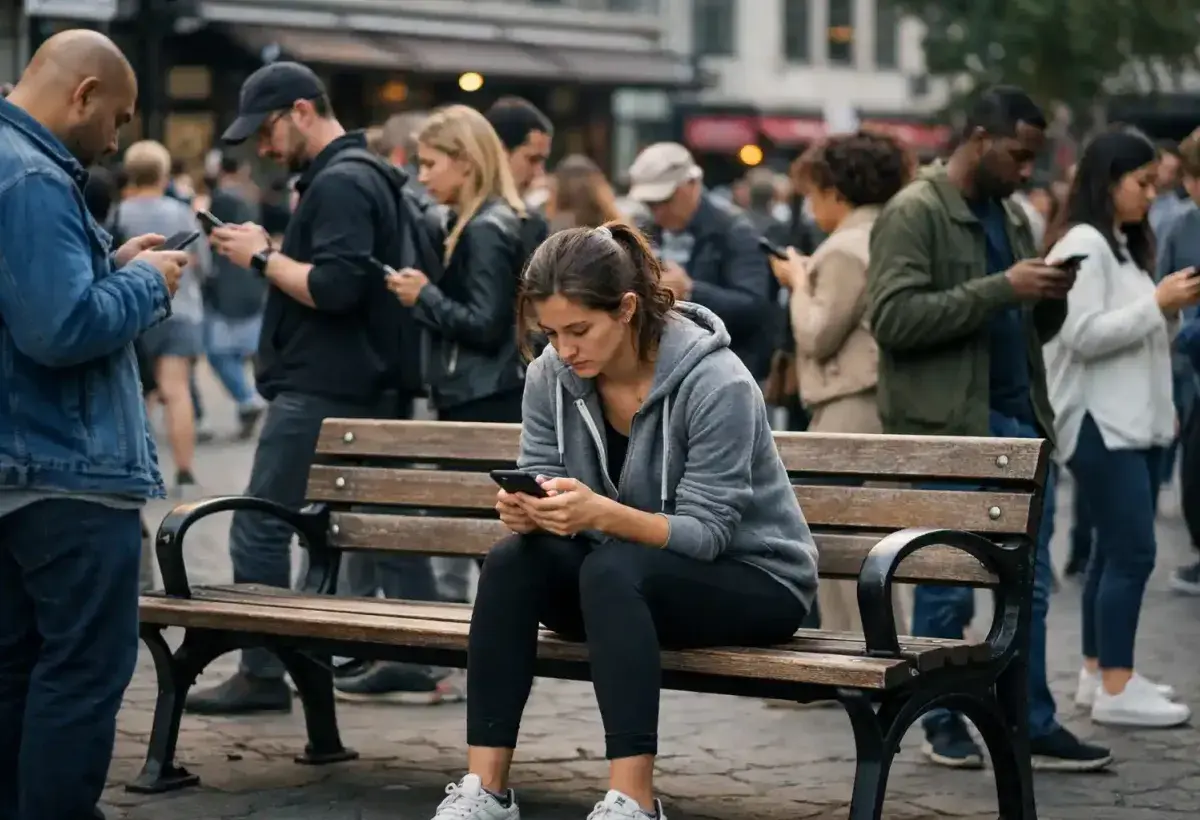
There is another factor that rarely gets discussed but may be even more important.
Many people feel deeply disconnected.
Modern life can be surprisingly lonely. Despite being more digitally connected than any society in history, many people feel isolated. Friendships are harder to maintain. Communities are less centralized. People move more often for work. Schedules are demanding and irregular. Economic pressures create constant stress. The structures that once supported social connection have weakened, and we have not fully replaced them.
When people feel unseen or unheard, frustration builds. Anger becomes a substitute for connection. It is easier to find people to blame than to find people to understand. Social media often becomes an outlet for this frustration, providing an audience for grievances that might otherwise remain private.
But the result is not healthy.
Instead of conversations, we get confrontations. Instead of understanding, we get accusations. Instead of curiosity, we get certainty. And certainty, when combined with anger and a sense of isolation, can be genuinely dangerous.
Because once we become convinced that everyone who disagrees with us is an enemy, meaningful dialogue becomes almost impossible. Once we see others as threats rather than fellow human beings, we stop listening. Once we stop listening, we stop learning. And once we stop learning, we stop growing.
This is how societies fracture. Not through sudden cataclysms, but through the slow erosion of mutual understanding. Each angry comment chips away at the trust that holds communities together. Each dismissive post widens the gap between us. Each moment of performative outrage makes it harder to remember our shared humanity.
One of the most concerning changes is how quickly people judge one another.
A single sentence can define someone's entire identity. A short video clip can create assumptions about a person's character. Context disappears. Nuance disappears. Patience disappears.
People become labels instead of human beings. They are reduced to the worst thing they have ever said or done, stripped of complexity and grace.
The internet encourages speed, but understanding requires time. Real life is messy. People are complicated. Most issues have layers. Most disagreements involve legitimate concerns from multiple perspectives. Yet social media often reduces everything into simple, binary categories.
Good versus bad. Right versus wrong. Us versus them.
These categories are easy to understand. They provide emotional satisfaction. They offer clarity in a confusing world. Unfortunately, they are rarely accurate.
The more we simplify one another, the easier it becomes to hate one another. And the easier it becomes to hate one another, the more divided society becomes. The cycle feeds itself.
Sometimes I find myself missing the ordinary posts. The ones that served no purpose other than to connect.
The photos of someone's breakfast.
The pictures from a family picnic.
The updates about a new puppy.
The excitement of someone getting a new job.
The random sunset photo taken because it looked beautiful, because someone wanted to share a moment of wonder.
Those posts may have seemed boring to some people. They were not designed to provoke. They were not optimized for engagement. They were simply human. Perhaps they served an important purpose. They reminded us that behind every profile was a human being living an ordinary life. They encouraged connection rather than confrontation. They gave us glimpses into each other's worlds.
Today, many people hesitate to post such things. They worry about criticism. They worry about judgment. They worry their content will not perform well, or worse, that it will attract negative attention.
The result is that social media becomes less social and more performative. People stop sharing their lives and start managing their image. Authenticity becomes harder to find. The spontaneous becomes replaced by the strategic.
I do not think society is doomed.
Despite everything, I remain genuinely hopeful. History shows that human beings are remarkably adaptable. We have faced periods of division before. We have survived technological revolutions before. We have navigated enormous social changes before.
The challenge today is learning how to live with technologies that influence our attention, emotions, and relationships in ways previous generations never experienced. This is not a small challenge. It may be one of the defining struggles of our time.
But it is not impossible.
It will take time. It will require education. It will require awareness. Most importantly, it will require individuals making conscious choices about how they engage with these platforms.
We can choose not to reward outrage. We can choose not to share content designed solely to provoke anger. We can choose to engage respectfully even when we disagree. We can choose to remember that a person on the other side of the screen is still a person with hopes, fears, and dignity.
Small choices matter. Culture is ultimately the sum of millions of individual decisions. We shape it with every post, every comment, every share. We build it with every conversation, every act of kindness, every moment of patience.
Perhaps the most important lesson is that social media is not society.
It reflects parts of society. Sometimes distorted parts. Sometimes exaggerated parts. But it is not the whole picture. It is a window, not the entire room. If we judge humanity solely through comment sections, we will almost certainly become discouraged. We will lose sight of the goodness that still exists in abundance.
Real life tells a more complete story.
The parent helping a child learn.
The stranger holding a door open.
The neighbor bringing food to someone in need.
The volunteer spending hours helping others.
The friend checking in after a difficult day.
The teacher staying late to help a struggling student.
The healthcare worker going beyond their duties to comfort a frightened patient.
These moments rarely go viral. Yet they form the foundation of civilization. They are the reason communities survive. They are the reason societies endure. They are the quiet evidence that kindness still matters.
When I look away from the screen and pay attention to the world around me, I often find evidence that kindness still exists in abundance. It is everywhere if we are willing to see it. It simply does not generate as many clicks. It does not feed the algorithm. It does not serve the business model.
And that is perhaps the most important thing to remember. The systems we have built do not represent us. They represent what is profitable. The distinction is everything.
Image
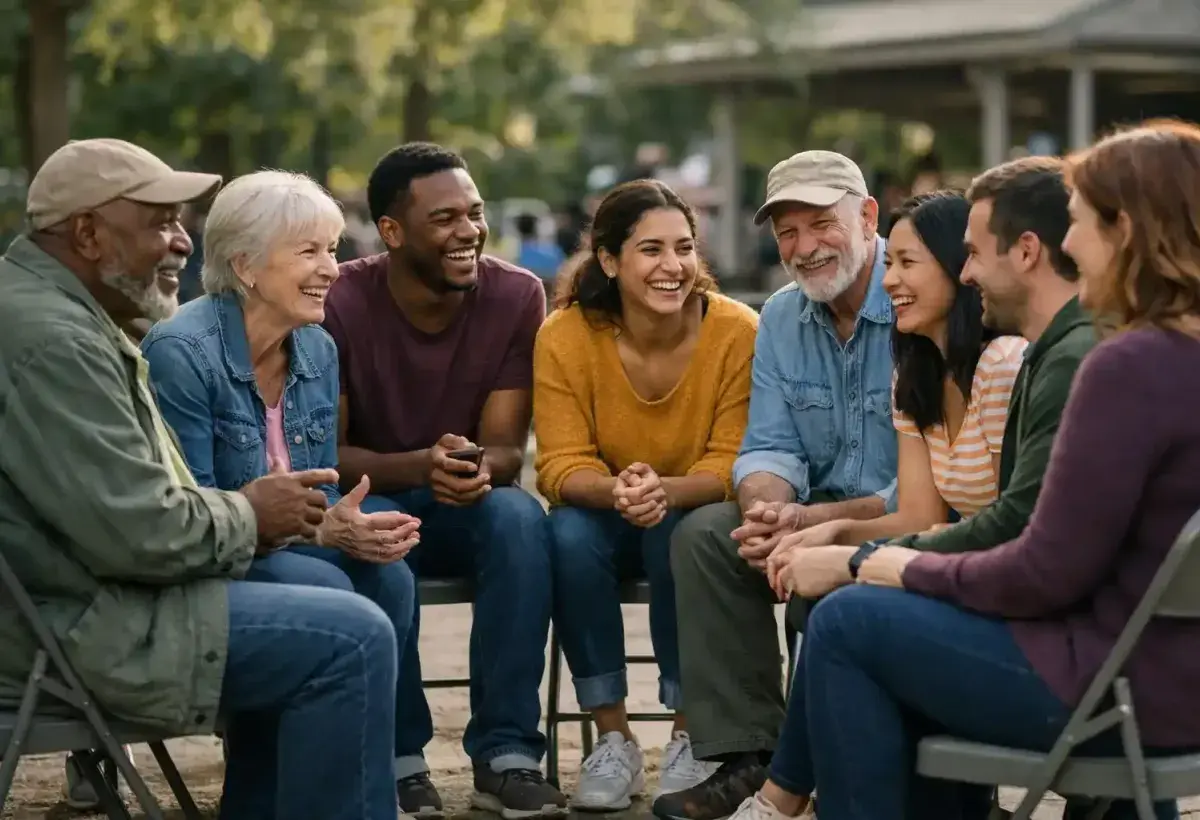
So what happened to society?
Maybe society did not become dramatically more hateful. Maybe the systems through which we experience society changed in ways we are still struggling to understand. Maybe outrage became profitable. Maybe conflict became visible in ways it never was before. Maybe algorithms learned that anger travels faster than kindness, that fear spreads more effectively than hope.
And maybe we have not yet learned how to protect ourselves from that reality. Maybe we are still figuring out how to live with technologies that were designed without our wellbeing in mind. Maybe we are still learning how to be human in a world that rewards our worst impulses.
The question is not whether society can recover. Human beings have recovered from worse. The real question is whether we are willing to consciously build a culture that values empathy as much as engagement, understanding as much as entertainment, connection as much as consumption.
I hope we are.
Because beneath the noise, beneath the arguments, beneath the endless stream of outrage, I still believe most people want the same things they always have.
To be heard. To be respected. To belong. To love and be loved. To feel that their lives matter, that their presence makes a difference, that they are part of something larger than themselves.
These are not complicated desires. They are fundamental. They are what make us human.
And perhaps remembering these simple truths is where healing begins.
Perhaps the answer is not to abandon social media entirely, but to use it more intentionally. To refuse the outrage bait. To seek out voices that challenge us without demeaning us. To share our ordinary moments even when they feel insignificant. To treat others with the dignity we hope to receive in return.
Perhaps the answer is to look up more often. To notice the people around us. To have conversations that cannot be reduced to soundbites. To build communities that exist beyond screens.
Perhaps the answer is to remember that we are not our algorithms. We are not the content we consume. We are not the arguments we have online. We are something more. Something older. Something that has survived fire and famine, war and plague, division and despair.
Something that still knows how to hope.
I choose to believe that. Even on the hard days. Even when the scrolling feels endless and the anger feels overwhelming.
I choose to believe that kindness still matters. That connection still matters. That we still matter.
And I choose to act accordingly.
Maybe society has not forgotten how to be kind. Maybe kindness is simply quieter than hate. And in a world that rewards the loudest voices, perhaps our greatest responsibility is to make sure the quieter ones are not lost.