
I did not start thinking about corporate culture because of economics textbooks, shareholder reports, or market analysis. I started thinking about it because of frustration. The kind of frustration that comes from sitting in front of a screen for hours trying to solve something that should be simple. The kind that makes a person wonder whether technology is still designed for humans or whether humans are expected to adapt themselves to systems designed only for efficiency and growth.
The strange thing about modern corporations is that many began with ideals. Small teams. Big dreams. A belief that technology could improve lives. Companies that are now worth billions or even trillions often started in garages, dorm rooms, rented offices, or with people willing to risk everything on an idea.
In the beginning, survival depends on trust.
Customers trust an unknown company. Early adopters forgive mistakes. Users become advocates. Communities form around products because they believe in the mission. The company grows because people support it before it becomes powerful.
Then something changes.
Not immediately. Slowly.
The company succeeds. Investors arrive. Shareholders expect returns. Quarterly reports become more important. Growth becomes mandatory instead of aspirational. Risk tolerance shrinks. Customer relationships evolve into metrics.
Somewhere along the way, many corporations stop asking:
What experience are we creating?
And begin asking:
How do we maximize revenue without reducing retention?
The difference between those two questions may explain much of modern consumer frustration.
I learned this lesson not from a textbook but from a screen. A screen showing an error message that made no sense to me. A screen standing between me and my own money.
I signed up for something that was supposed to be free. That is how it started. A few clicks, a credit card for verification, and access to a powerful cloud platform for thirty days of learning. I was curious. I wanted to build something small, test my skills, and understand what all the excitement was about. The free trial felt like a generous invitation from a company that once promised to put a computer on every desk. That felt like progress.
Six days into my free trial, I shut down my virtual machine. I thought that was the end of it. I had used a small portion of my credits and assumed the story was finished. A small portion of my free credits remained unused. Weeks later, my bank sent me a notification that made my stomach drop. The company had charged my card nearly eighty five dollars.
I stared at the notification for a long time.
I had not consciously upgraded to a paid plan. I had not expected ongoing charges. I had not anticipated finding myself in a billing dispute connected to something I believed had ended weeks earlier.
The charge appeared unexpectedly and immediately raised questions.
What happened next was worse than the charge itself.
Image

I tried to log into my account to understand where the charge came from. Instead of the dashboard I expected, I was met with an error message saying the tenant had been blocked due to inactivity. A string of technical language that meant almost nothing to me in the moment.
I was locked out of the very place I needed to go to understand the problem.
That was the part that unsettled me.
The company had processed a charge linked to the account. Yet the account itself no longer seemed accessible enough for me to review usage, understand billing details, or cancel anything if needed.
There was no obvious path forward.
I spent days trying to solve it.
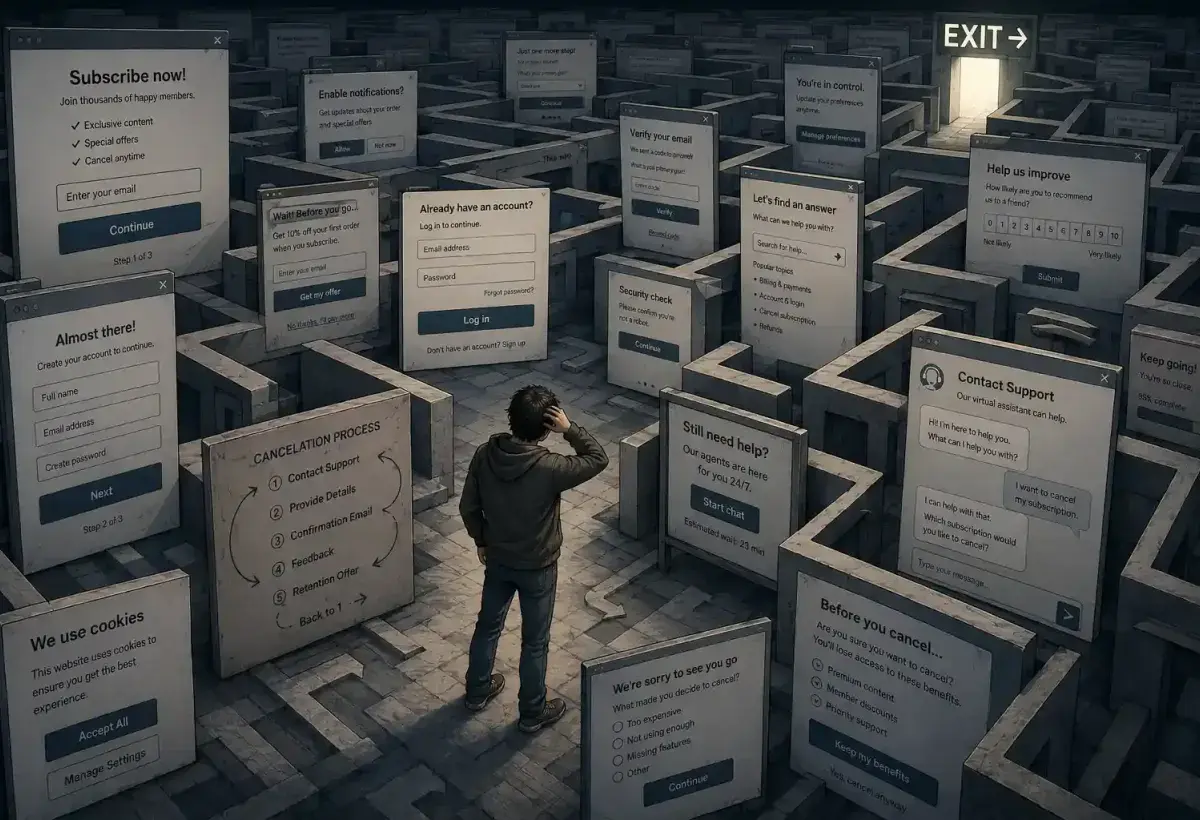
I called support numbers. Automated systems redirected me to websites. The websites required login access. The login failed with the same error message.
The cycle repeated.
Eventually I stopped wondering whether I was missing something and started wondering about a larger issue.
What happens when digital systems become so dependent on self service that people who lose access lose access to help as well?
That question extends beyond one company.
It reflects something broader happening across technology.
The Loop That Never Ends
I searched forums. I looked for support pages. I tried alternative routes suggested by strangers online who had experienced similar situations.
Many stories sounded familiar.
Unexpected charges.
Confusing billing.
Locked accounts.
Difficulty finding human support.
Some users resolved their issues quickly. Others described weeks of frustration.
Patterns emerge when enough people tell similar stories.
At a certain point I stopped wondering whether these loops were merely accidental. I began wondering whether they were unintended consequences of systems increasingly optimized for efficiency, scale, and reducing support costs. For the person trapped inside them, the distinction can become difficult to feel.
There is an important difference between intentional neglect and unintended outcomes shaped by incentives. Yet from the perspective of someone trapped inside the system, the emotional experience may feel remarkably similar.
Perhaps that is part of what has changed in modern business. There was a time when customer loyalty was earned through relationships. Companies understood that trust was valuable because losing trust could damage reputation for years.
Today, many systems feel engineered around friction.
Subscription models renew automatically. Billing structures become layered. Support systems become increasingly difficult to reach. Human interaction disappears behind automated workflows and account portals. When problems happen, customers often discover there is no obvious person to speak with.
The irony is difficult to ignore.
Technology promised accessibility.
Instead, many experiences feel inaccessible.
Technology promised efficiency.
Instead, many consumers spend hours navigating support loops.
Technology promised empowerment.
Yet many users discover they cannot easily stop charges, understand invoices, or regain account access.
Image
Shareholders First, Customers Last?
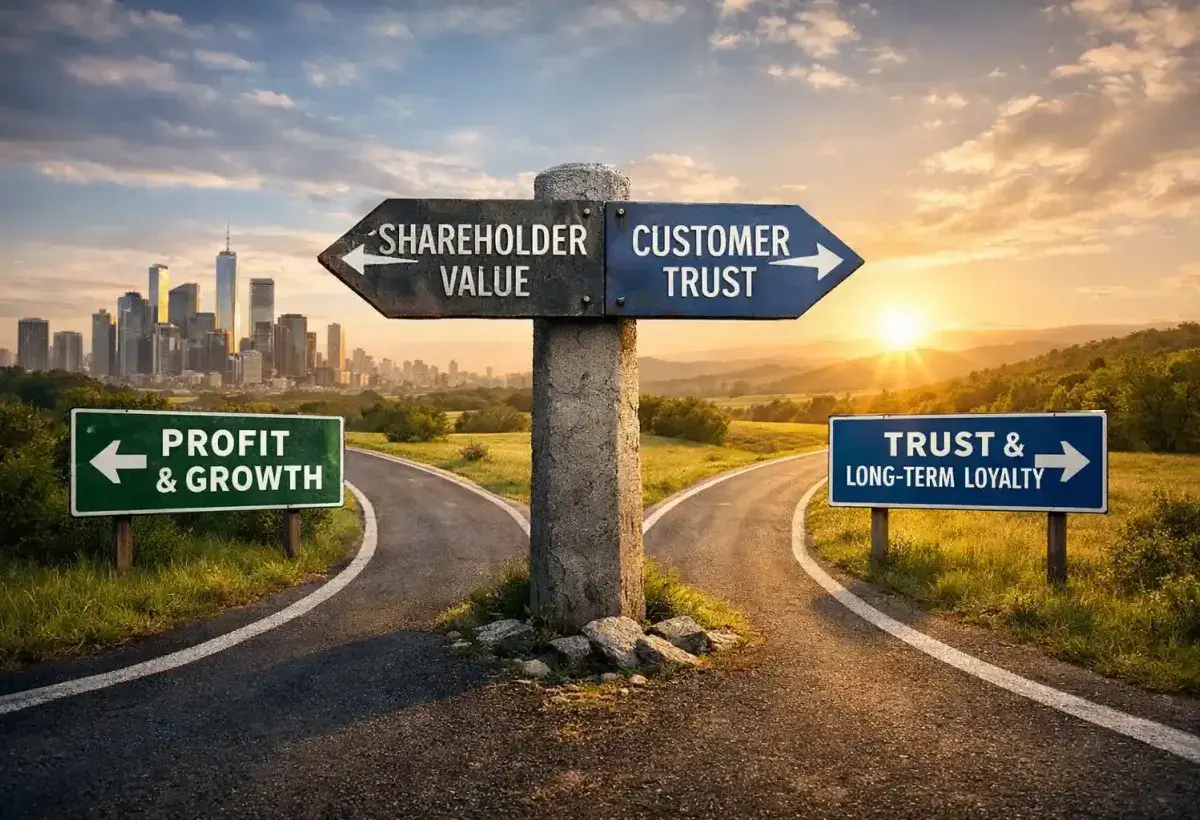
Corporate culture has undergone a quiet transformation over recent decades. The old idea that companies exist primarily to serve customers increasingly competes with another philosophy.
Maximize shareholder value.
Profit itself is not unethical.
Businesses require profit. Innovation requires investment. Growth funds research and expansion.
The tension emerges when growth becomes the only visible measure of success.
Support departments become expenses.
Human interaction becomes inefficiency.
Simplification becomes secondary to optimization.
Relationships become transactions.
Consumers become recurring revenue streams.
Language changes too.
Users become monthly active users.
Trust becomes retention.
Communities become engagement metrics.
The transformation sounds subtle.
Its effects are not.
Because humans still experience frustration emotionally.
No dashboard removes that.
No quarterly report replaces that.
No valuation eliminates that.
I am not suggesting executives intentionally design systems to frustrate users. Reality is usually more complicated than that.
But incentives matter.
Systems evolve around priorities.
If reducing support costs becomes more important than reducing confusion, outcomes change.
The automated loops I encountered may not exist because anyone planned them maliciously.
They may exist because nobody with authority considered fixing them urgent enough.
There is a difference between greed and indifference.
Both can damage trust.
The free trial itself raised another uncomfortable question.
How informed are users when entering subscription ecosystems?
Years ago, purchasing something often meant a single decision.
Today, access often replaces ownership.
Products become services.
Payments become recurring.
This creates convenience but also introduces new risks.
Busy people click.
Busy people trust.
Busy people assume systems are designed fairly.
Corporations know this.
The ethical question is not whether terms exist.
The ethical question is whether systems prioritize informed understanding or maximizing conversion.
Those are different philosophies.
One prioritizes long term relationships.
The other prioritizes immediate growth.
Image
The Human Cost of Automation
I tried everything.
Forums.
Phone calls.
Alternative login paths.
Advice from strangers.
Repeated attempts.
At some point the frustration stopped being about the money.
Nearly eighty five dollars matters.
But the emotional cost of feeling trapped inside a system designed without obvious exits felt heavier.
There is something uniquely exhausting about trying repeatedly to reach a human being and finding only automated responses.
Perhaps one of the strangest developments in modern business is how support itself increasingly feels like a premium service.
Reaching a person becomes difficult.
Finding answers requires persistence.
Consumers adapt by helping one another.
Strangers often provide more useful guidance than official channels.
Think about that.
Communities outside corporations increasingly perform the emotional labor of helping users navigate systems created by corporations themselves.
Trust migrates toward whoever provides understanding.
Not necessarily whoever owns the platform.
Trust remains one of the most underestimated assets in business.
It compounds slowly.
It disappears quickly.
History repeatedly shows dominant companies becoming vulnerable when consumers no longer feel respected.
Respect matters more than corporations sometimes calculate.
A respectful experience communicates:
We value your time.
We understand confusion.
We want transparency.
We want resolution.
Customers rarely expect perfection.
They expect fairness.
That distinction matters enormously.
Most people forgive mistakes.
People struggle more with systems that make mistakes feel impossible to solve.
Where Do We Go From Here?
I am writing this because I hope someone inside these companies eventually reads reflections like this.
Not as complaints.
As signals.
The solution does not seem impossible.
Create support paths that bypass login requirements for billing disputes.
Allow locked account cases to reach trained human agents.
Publish transparent processes for refund requests tied to inaccessible accounts.
These ideas are not revolutionary.
They are customer service principles older than modern cloud computing.
The companies remembered decades from now may not be those with the most aggressive monetization strategies.
They may be remembered for something increasingly rare.
Clarity.
Fairness.
Accessibility.
Trust.
Technology companies once promised empowerment.
A computer on every desk.
Information in every home.
Opportunity without gatekeepers.
Somewhere between startups and trillion dollar valuations, many systems became efficient at scaling products but less effective at recognizing the people using them.
Behind every dashboard, subscription, billing account, and error code sits a person trying to solve a problem.
Sometimes all they need is another human to answer.
Trust created many of today's largest companies.
Trust helped consumers embrace unfamiliar technologies.
Trust transformed startups into empires.
The question worth reflecting upon is simple:
Once companies become empires, do they still remember the people who believed in them when they were small?
Because sometimes modern systems seem highly efficient at attracting users.
Remembering users after growth may be a different skill entirely.
And perhaps that difference will determine which companies shape the future and which become warnings remembered by history.
The most valuable asset any corporation owns may not appear on financial statements.
Not infrastructure.
Not patents.
Not market capitalization.
Not even revenue.
It may be something older and more fragile.
The willingness of ordinary people to believe a company deserves their trust.
Lose that long enough and even giants become vulnerable.
Protect it and companies become something rarer than profitable.
They become respected.
History remembers both.
Not equally.
I am still trying to resolve my refund.
I will keep calling.
I will keep asking questions.
I will stay polite but persistent.
But I keep returning to the same thought.
The experience surrounding the free trial ultimately cost me money.
The experience cost me something else.
The assumption that companies built around empowering people would always remember there is a human being sitting behind every account.
I hope they remember.
I hope someone fixes the loop.
I hope the next person who signs up believing something is simple does not spend days trying to escape a maze.
I hope trust becomes valuable again.
Because shareholders are important.
But trust built many of the companies shareholders depend upon in the first place.