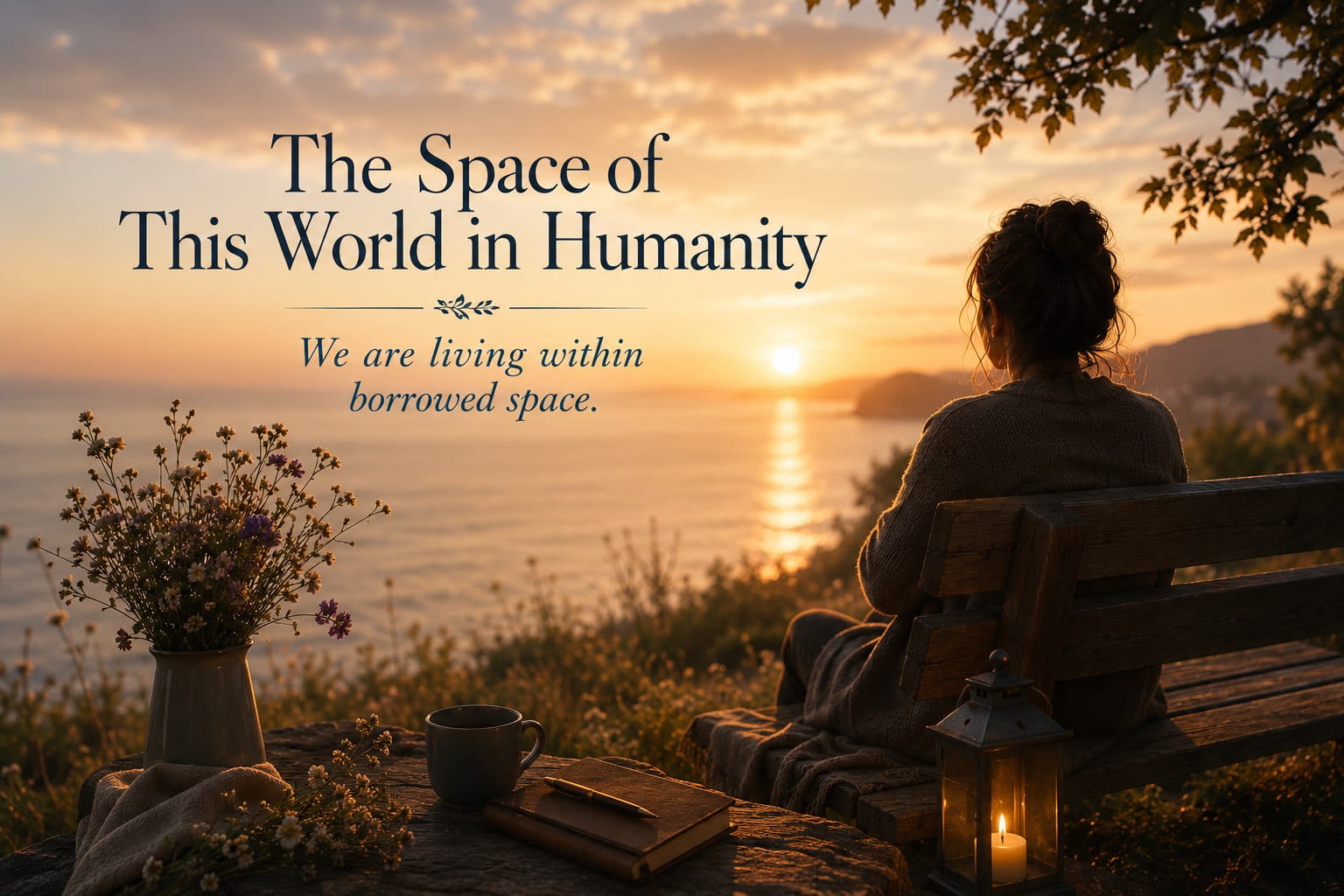
When Presence Becomes the Greatest Wealth: Reflections After My Sister’s Death
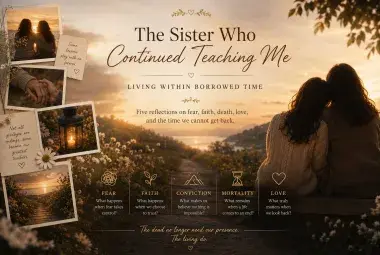
(One chapter in a five-part reflection series chronicling a sister's journey through fear, faith, illness, loss, and the enduring lessons of love. Links to the complete series are provided below.)
Nine missed calls. A few messages. Only three words:
“She gave up.”
“We lost her.”
I felt numb. I did not know what to think or what to say. Then my phone rang again. It was my mother.
“I’m lost here… what happened to your sister?”
My voice trembled as I answered, “It happened around 2 AM.”
Then silence. Just silence.
I allowed it to remain there for a while. I gave her the space to absorb the weight of what had just happened. As a mother myself, I understand pain but not to the extent of losing a child. After a long pause, I heard her say softly:
“Involve me and keep me posted.”
Then the line disconnected. And suddenly, I was left alone again with my thoughts. While wiping my tears, I kept asking myself the same questions over and over:
Why didn’t you visit her while she was still alive?
Why didn’t you just try to be there during her difficult days in the hospital?
Why didn’t you hold her hand so she could feel your warmth and presence?
Another part of me argued back:
“I planned to fly there this Monday. I even discussed with my brother about hiring a private nurse to watch over her full-time.”
There were so many things we wanted to do. But life, as embarrassing and painful as it is to admit, is sometimes restrained by financial capacity. That was our reality.
And now my only sister is gone.
What distresses me most is not only losing her but the guilt of not being physically present during the time she was fighting for her life. I realize now that presence is one of the most important spaces a human being can offer another person during suffering.
To lie in a hospital bed, attached to machines, grasping for one breath after another, must be terrifying. And seeing only one exhausted and sleepless son constantly beside her must have been painful for her too.
Perhaps somewhere in her mind, she wondered:
“Where is the rest of my family?”
She was asking for support financially and physically. Although we ourselves were struggling just to sustain our own household, I still tried to send whatever amount I could, even if it was small compared to the growing hospital bills. At that time, I convinced myself that sending money instead of going there was the practical thing to do.
But now, standing in the aftermath of loss, I no longer know what the right decision was. And what remains in me now is grief.… and guilt.
Guilt for not visiting her even once while she was fighting to stay alive. Guilt for allowing financial limitations to cloud decisions that now feel deeply irreversible.
Image
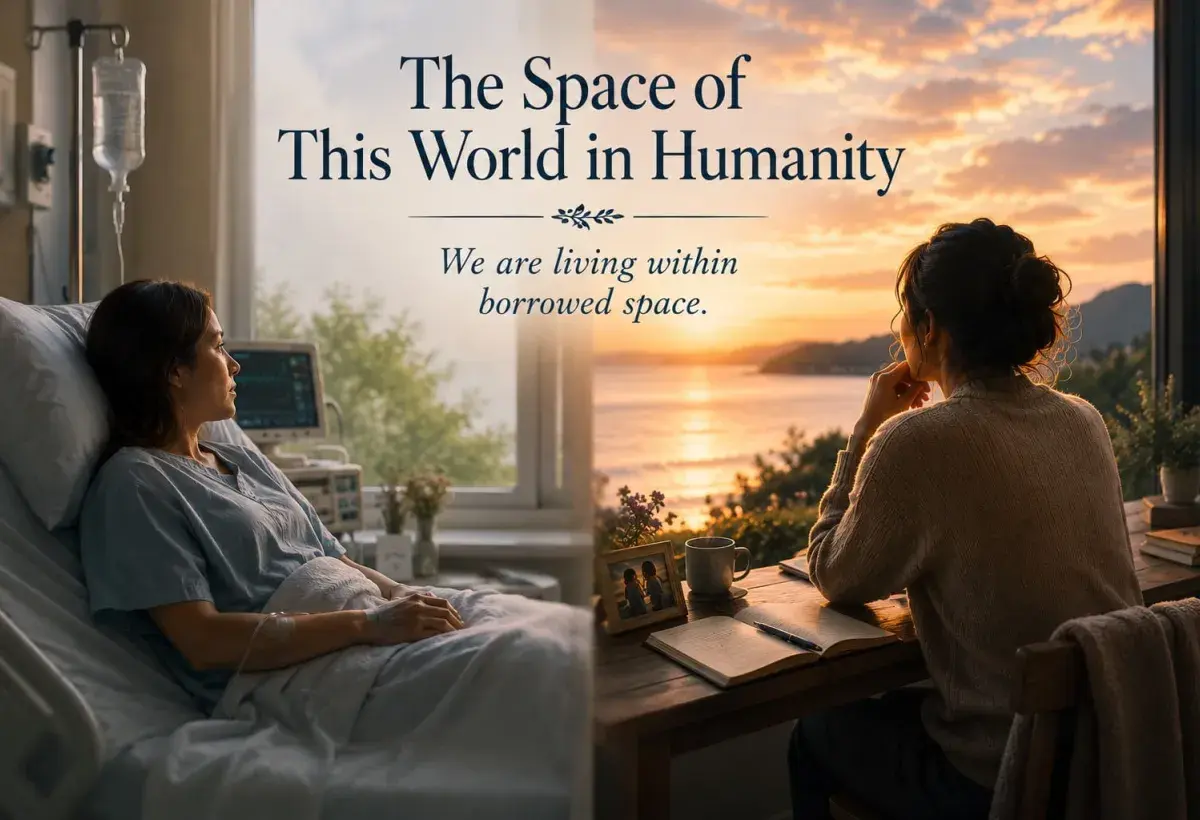
Today, All I Can Do is Write How Deeply Sorry I Am.
This morning, while brewing coffee, I noticed that what I smelled was not coffee but the scent of a candle. And in that quiet moment, I whispered:
“You visited me. I am truly sorry, my dear sister, for not being with you and for not taking care of your needs the way I used to. My financial situation is very different now.”
And I allowed my tears to fall freely. Slowly, the scent disappeared.
What is life teaching me here is this:
Situations affect values. They redirect priorities. They reshape the way we think and decide. Human beings are vulnerable to circumstances, and sometimes survival itself rearranges our moral compass without us even realizing it.
But another question haunted me:
If I had been in her condition, what would I have felt toward my siblings and family? Would I have felt abandoned too?
In life’s most painful moments, the longing for warm human presence, the feeling that someone still sees your worth, your dignity, and your humanity is one of the greatest treasures anyone can receive.
I remember a story shared by a friend twelve years ago. She told me about a wealthy man she knew well. Every time she visited him, a driver would fetch her, and a room in his home would already be prepared for her stay. He was generous, respected, and financially secure.
Then he became ill. Within months, he died.
My friend cried loudly during his funeral not only because he was gone, but because of how poorly his funeral was handled and how crowded and undignified the public cemetery was where he was buried.
And She Asked Something That Never Left Me
“Even if sickness wiped out his wealth, what happened to all the people he helped, supported, and loved? Was that it? Simply because he was no longer breathing, he no longer had value?”
She later told me that witnessing his death changed her life completely. She reorganized her finances. She secured healthcare, insurance, funeral services, and a memorial lot.
Her words stayed with me:
“We are all going there eventually. It is only a matter of time. I do not want to become a burden to my children who are still trying to build their own lives. Now I know where my money goes. If I become sick, my family only needs to bring me to the hospital. And if I die, they can grieve peacefully without inheriting debt from my death.”
She is a wise woman.
And now, twelve years later, I finally understand what she meant. Not intellectually but personally. I resonate with her now in ways I never could before.
And so I find myself recalibrating my own life while I still can. Praying for a stronger and healthier life while slowly preparing for the next inevitable chapter of our existence: death.
I do not know when it will happen or how it will come. But every human being eventually reaches that destination. Actors, billionaires, famous people, beautiful faces, ordinary workers, the poor, the powerful we are all living within borrowed time.
Even those trying to alter life itself through science will eventually leave this world once their name is called.
And maybe this is what I can offer to readers who followed my sister’s journey with her diagnosis, her fear, her fight to reclaim life, and eventually, her passing:
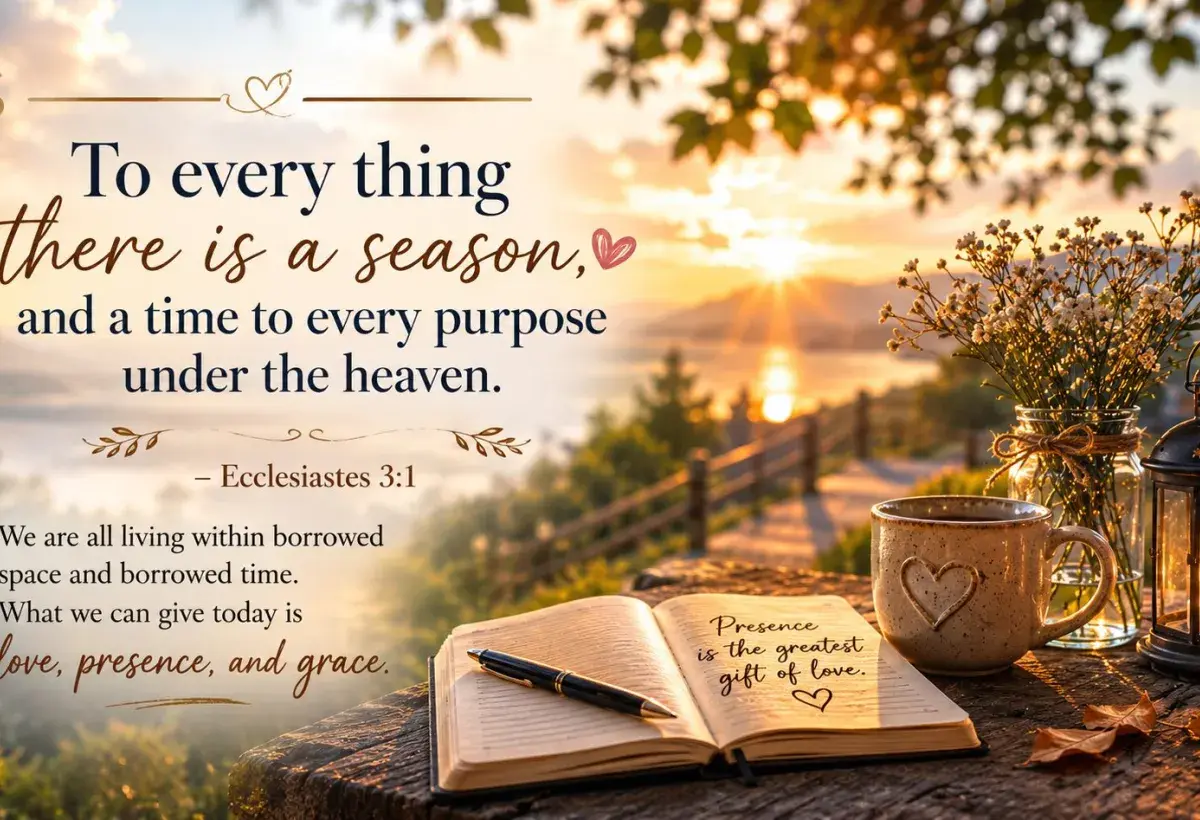
We Are all Living Within Borrowed Space and Borrowed Time
As written in Ecclesiastes 3:1–8: and 17
“To every thing there is a season, and a time to every purpose under the heaven:
A time to be born, and a time to die; a time to plant, and a time to pluck up that which is planted;
A time to kill, and a time to heal; a time to break down, and a time to build up;
A time to weep, and a time to laugh; a time to mourn, and a time to dance;
A time to cast away stones, and a time to gather stones together; a time to embrace, and a time to refrain from embracing;
A time to get, and a time to lose; a time to keep, and a time to cast away;
A time to rend, and a time to sew; a time to keep silence, and a time to speak;
A time to love, and a time to hate; a time of war, and a time of peace.”
And lastly, verse 17 reminds us:
“God shall judge the righteous and the wicked: for there is a time there for every purpose and for every work.”
That is the humbling truth of humanity:
We own nothing permanently not even time. All we truly have is the space we create in one another’s lives while we are still here. And in the end, presence is the greatest form of love we can leave behind.
Image
About the Author
The Listening Pen writes not from certainty, but from quiet attention. She moves through life one step at a time, learning to pause, to notice, and to listen, not to the noise of the world, but to the gentle whispers within her own heart. It is in these unguarded moments, where reflection meets honesty, that her words begin to take shape. She does not claim to have all the answers, but she chooses to remain present, to feel deeply, and to translate those inner stirrings into thoughts that may resonate with others walking their own unseen journeys. In listening, she understands. And in understanding, she writes.
Part One: Why Will You Die? A Reflection on Fear, Framing, and the Gift of a New Heart https://reflections.chikicha.com/why-will-you-die-part-one-reflection-fear-framing-and-gift-new-heart
Part Two: Why Will You Die? Part Two. A Reflection on Trust When Life Is No Longer Ours to Control https://reflections.chikicha.com/why-will-you-die-part-two-reflection-trust-when-life-no-longer-ours-control
Part Three: Nothing Is Impossible https://reflections.chikicha.com/nothing-impossible
Part Four: The Space of This World in Humanity: A Reflection on Death, Presence, and the Borrowed Time We Live In https://reflections.chikicha.com/space-world-humanity-reflection-death-presence-and-borrowed-time-we-live
Part Five: The Friend I Never Became: What my sister's death taught me about love, presence, and the time we cannot get back https://reflections.chikicha.com/friend-i-never-became-what-my-sisters-death-taught-me-about-love-presence-and-time-we-cannot-get